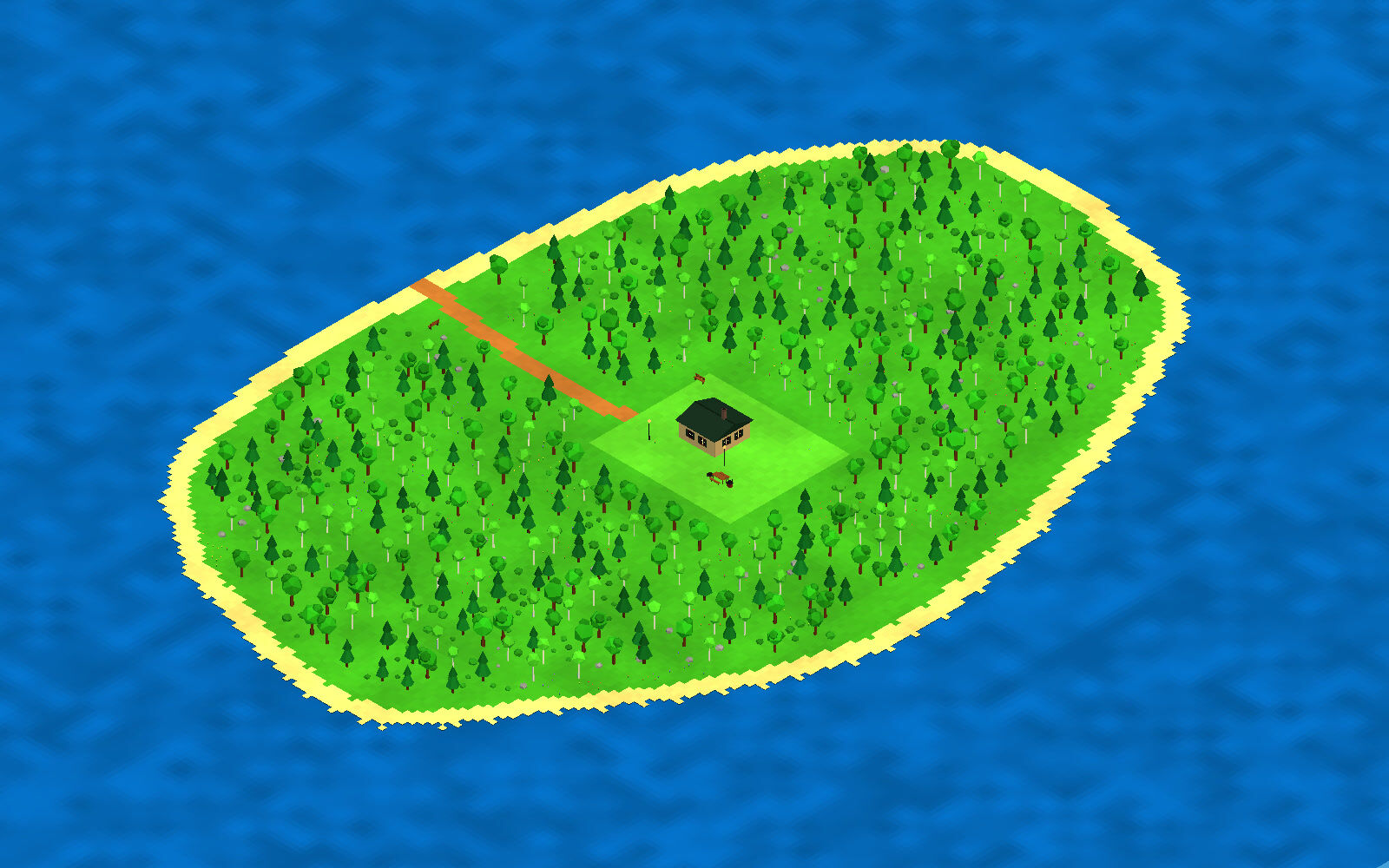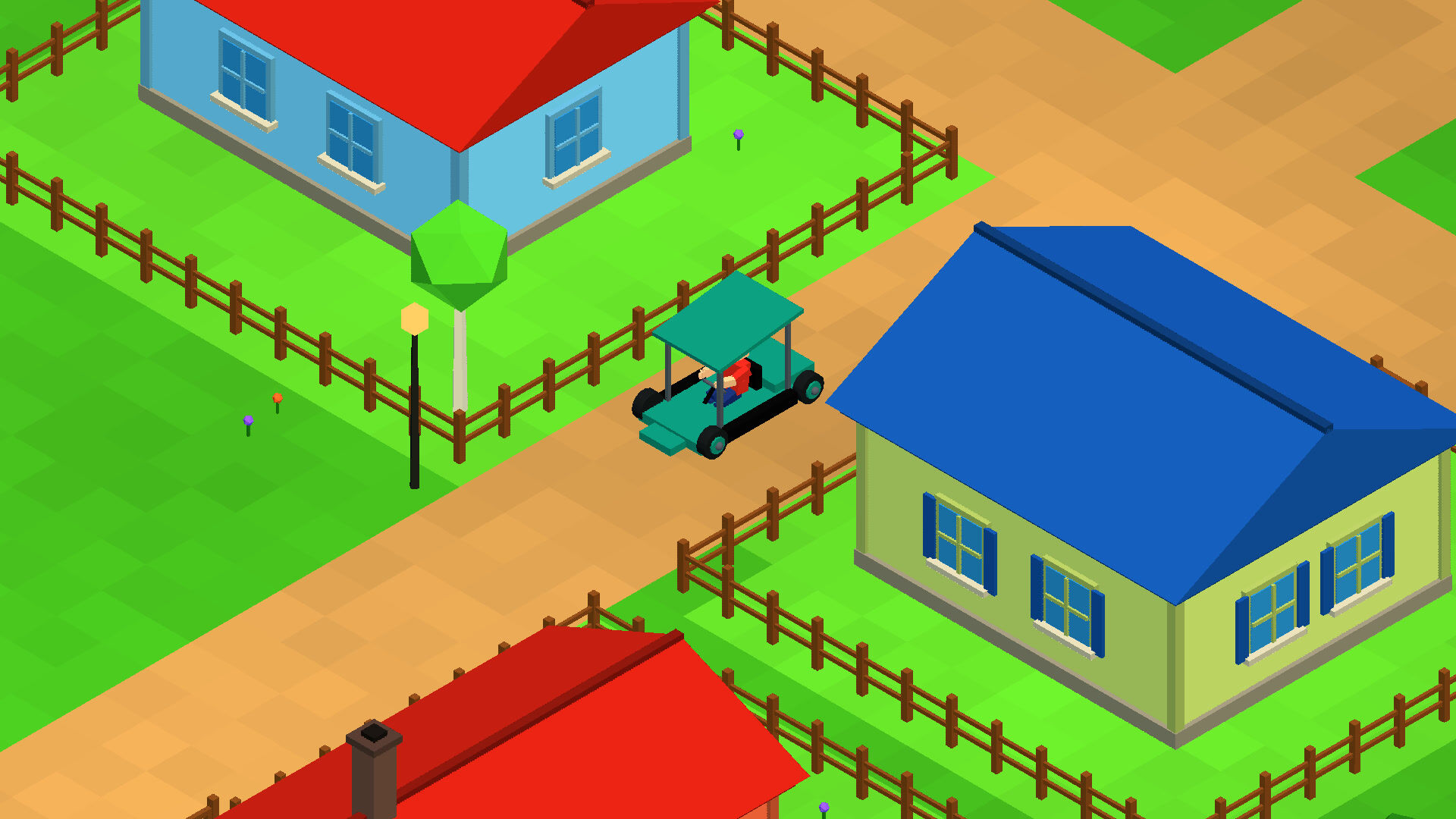


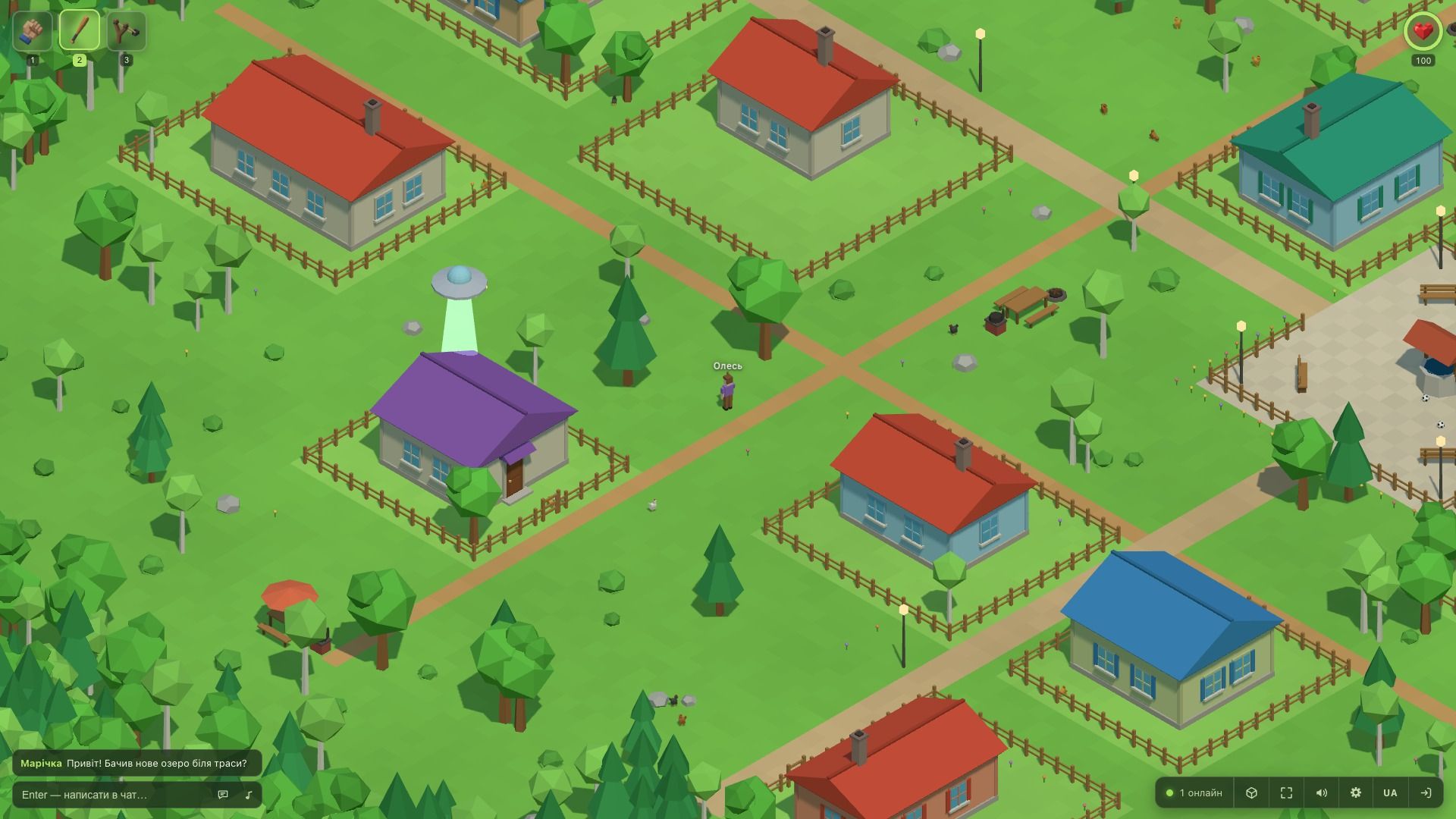
Hens have appeared in the gardens. They wander the village, peck at the grass and can die in three different ways, while a replacement for the lost one is delivered by a UFO in its flying saucer.
Where a hen may stand
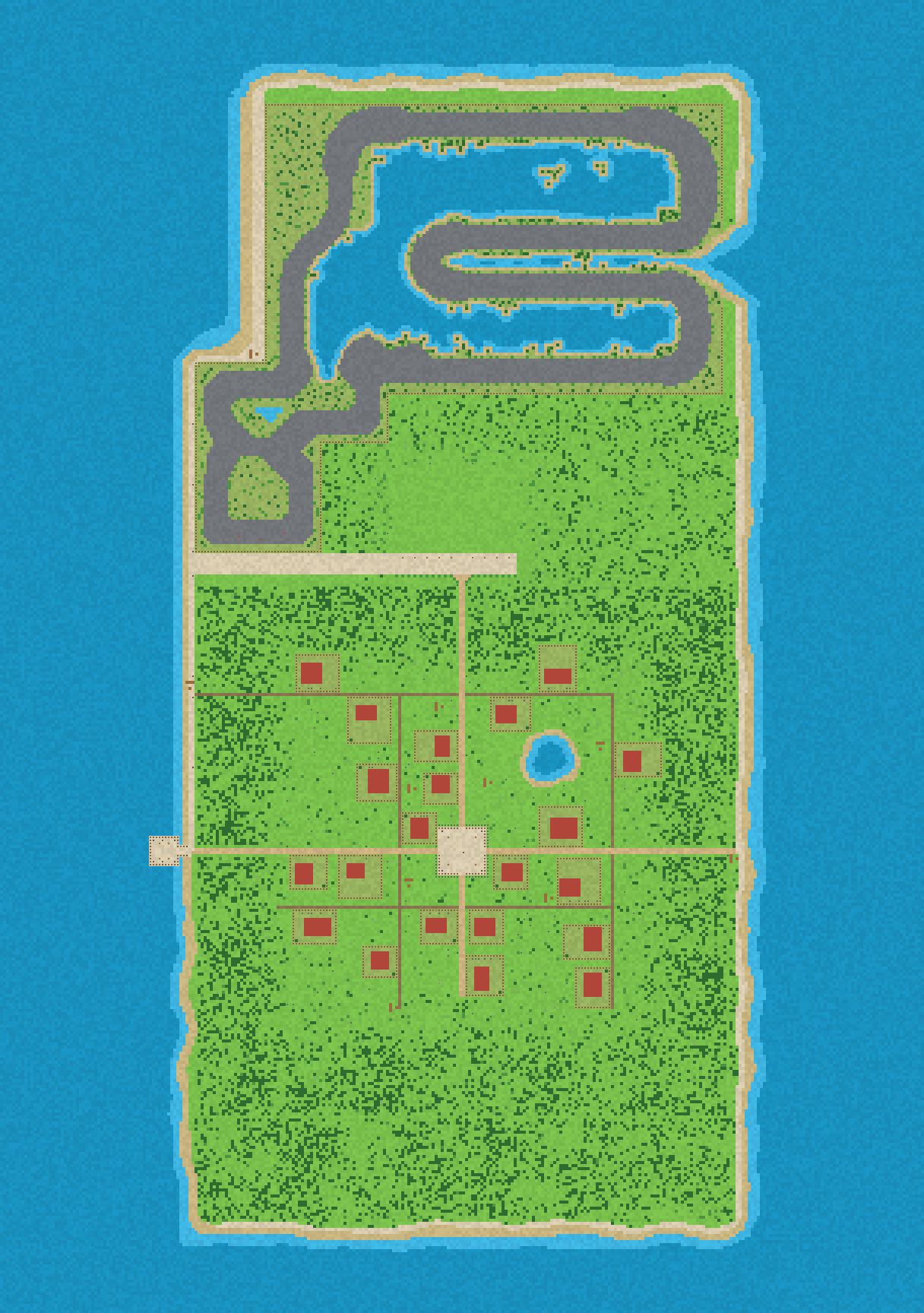
The task sounded simple: spread the hens evenly, denser near the houses and not out in the forest where a player would never reach them. Straight-line distance to the nearest house answers only the first half of that task. A cell three metres behind a house, on the other side of its own wall, is formally close, but it can only be reached the long way round.
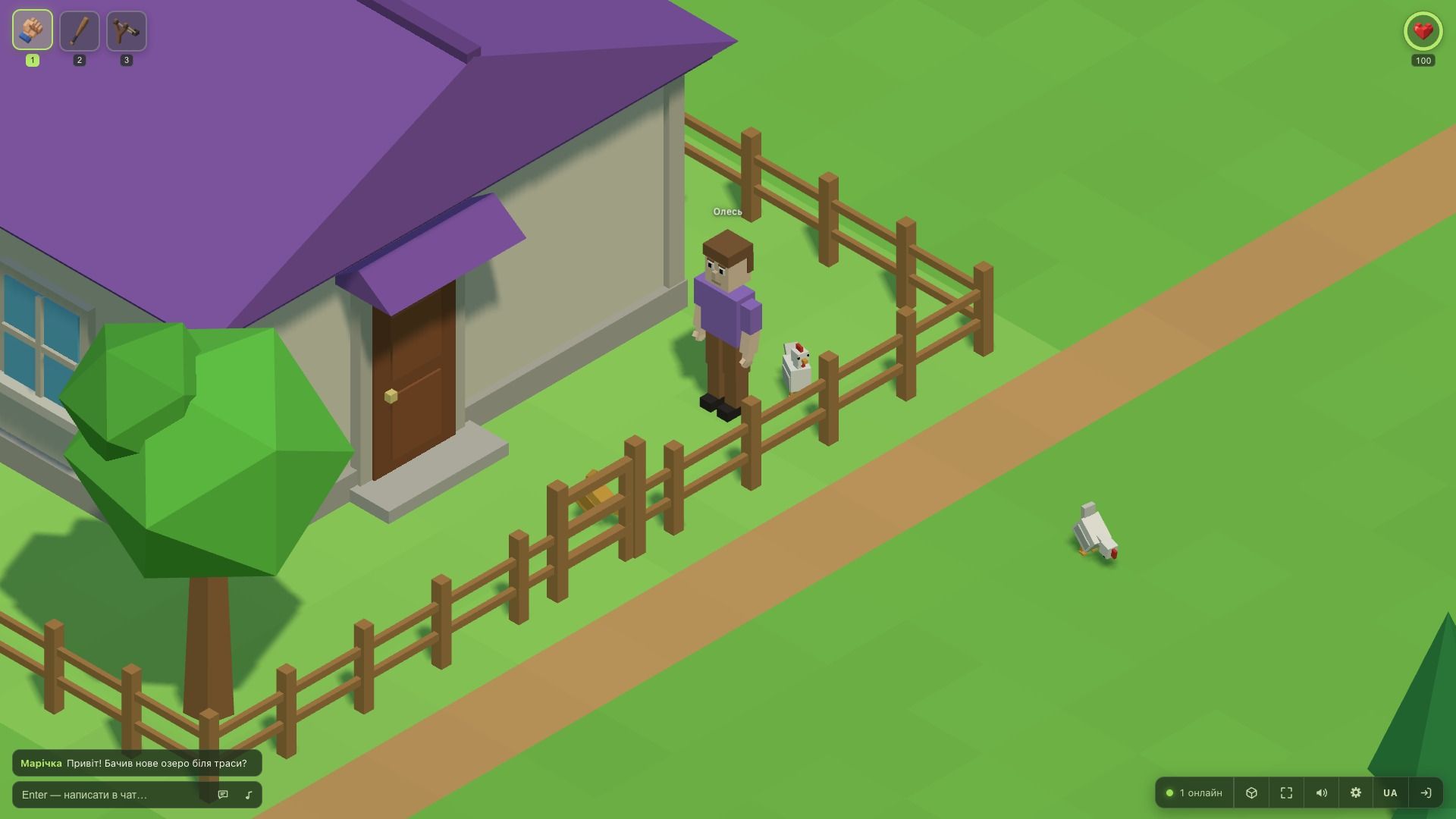
So the distance is measured on foot rather than in a straight line. A sealed area has no distance at all, and a garden entered only through its gate fairly counts as next door. On the real map this produced a distribution where the median hen stands five cells from a house instead of twelve.
How a hen behaves
A hen grazes an area of about five metres, walks slowly and pecks only at grass. A beak jabbing at cobblestone looks plainly wrong, so for a hen that has wandered onto stone the behaviour shifts towards walking, and she returns to the lawn on her own.
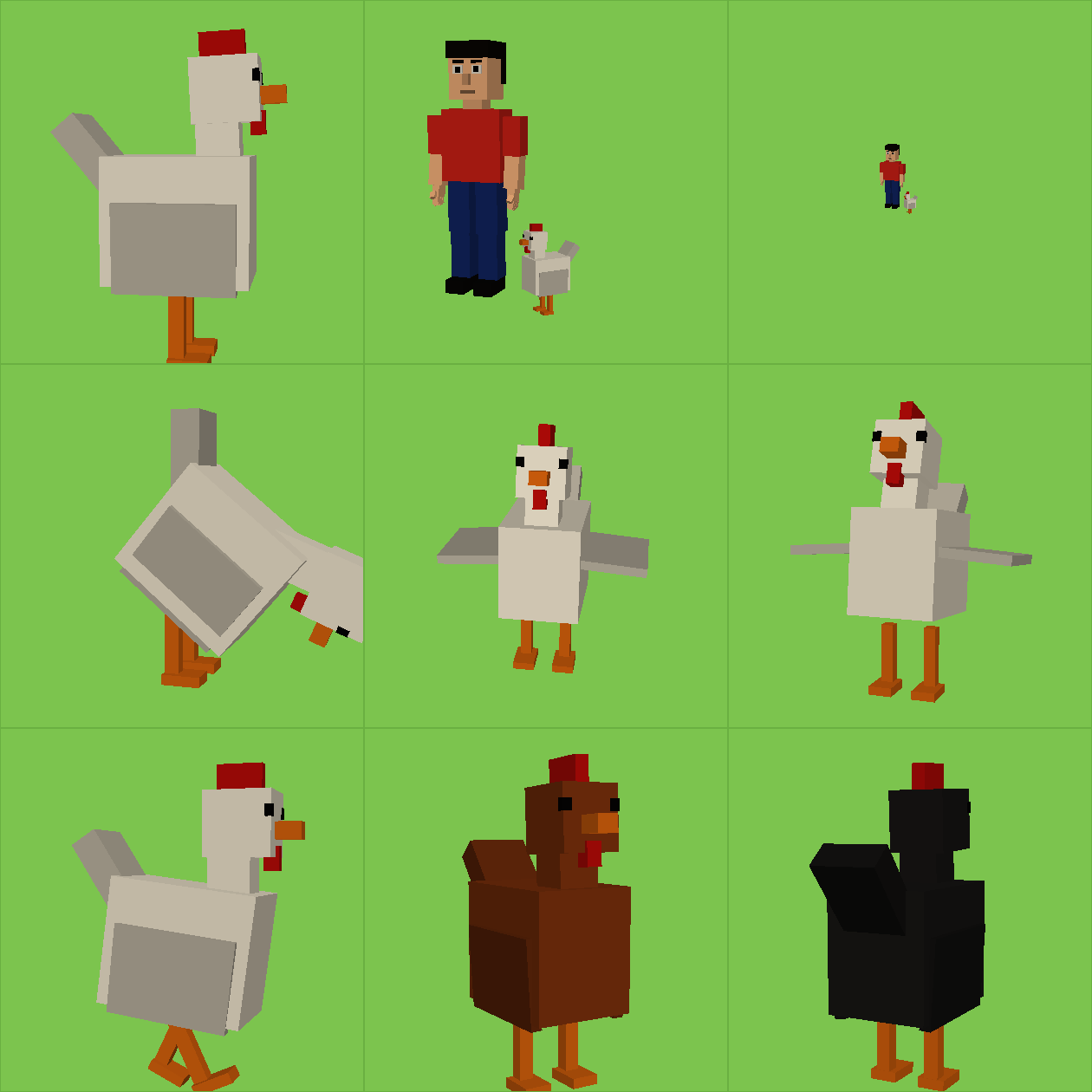
Hens are not predicted by the browser, unlike players. A hen cannot be dribbled, so there is no continuous interaction to guess at between frames: the server reports the position and the client draws the movement smoothly.
Three ways to lose a hen
A hen dies from a hit with the bat, from a slingshot stone and from a football, but only a moving one, because she walks into resting balls herself. Fists do not affect a hen for the same reason they do not strike a football. A stone’s ricochet is harmless.
The feathers scatter with their own physics: they rise about 0.81 metres, spread over 0.95 metres and settle completely within 1.9 seconds. In the first version they hung at a height of 37 centimetres and did not come down at all, because the damping formula depended on the frame rate.
The UFO with a new hen
Five seconds after the loss a flying saucer appears over the gardens. It arrives from about 85 metres away in three and a half seconds, hovers, lowers a beam of light to the ground and sends a new hen down it. The hen lands, the beam retracts, and the saucer leaves beyond the horizon.
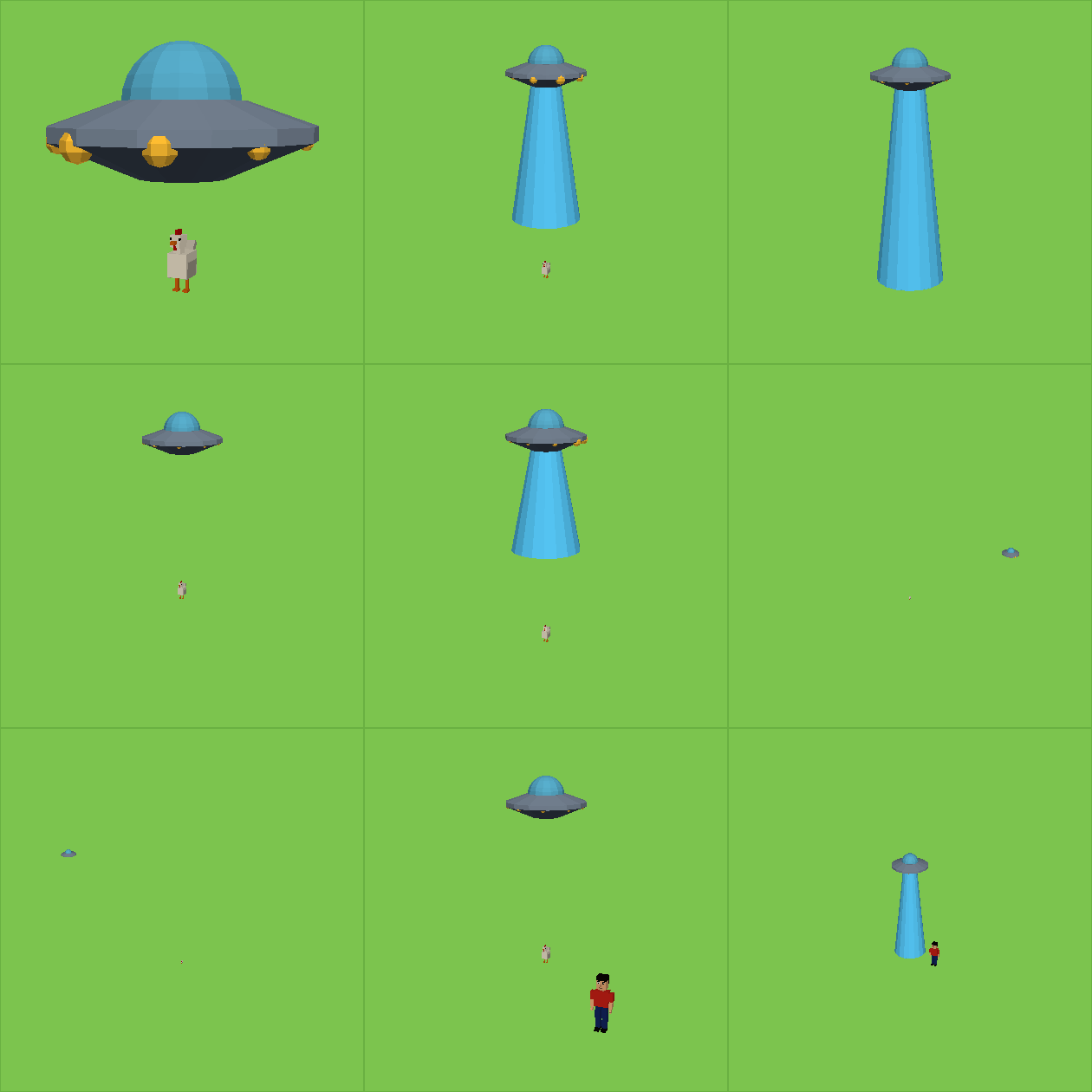
The new hen appears 6 to 18 metres from the site of the event: away from whoever was just swinging the bat, but within the same screen. The first version sent the replacement to an arbitrary place on the map, and that was right about exactly one thing, that the hen did not land under the bat. In the main it was a mistake, because the delivery is a spectacle, and a saucer eighty metres away goes unnoticed.
The saucer’s hum is the only moving sound in the game. It carries a hundred metres, yet it is no louder overhead than nearby, because the loudness curve has a flat top.
The number of hens
The number of hens is set in the administration panel from zero to 128, in steps of one and of ten, because a stepper that takes two minutes to cross its own range is one nobody uses. The slingshot’s aim ring now marks hens the same way it marks players.