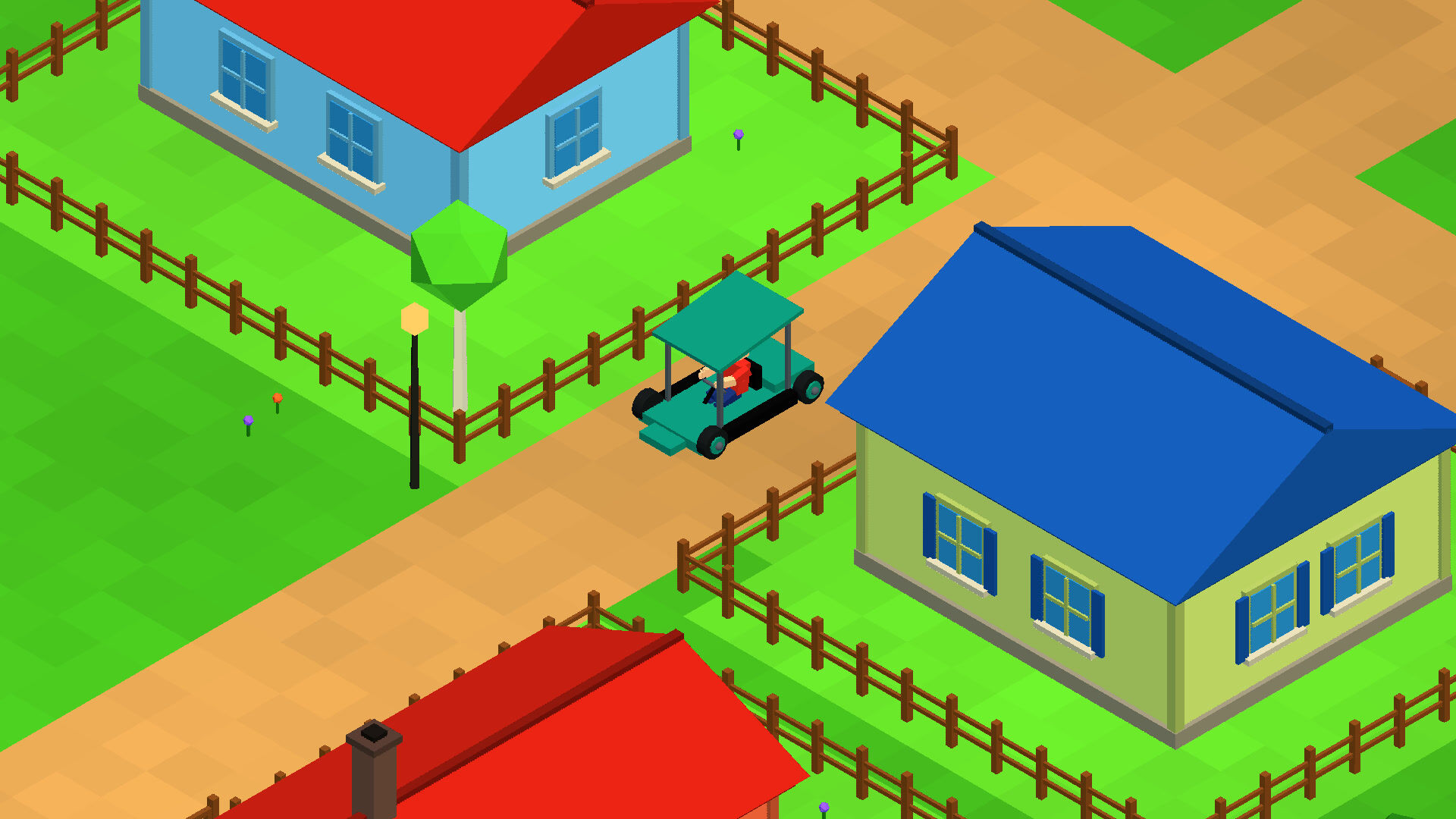


Following cars in the open world, Isomania has gained two more kinds of transport, furnished interiors and races that can now name a winner. A separate forest island has appeared in the east, and a voice-powered robot assistant called ISOBOT has joined the game. Here are the changes that have accumulated up to version 0.76.0.
You can now enter the houses
Doors are no longer just part of the facade. Press E beside one to open it, walk in and close it behind you. Door state is shared, so another player sees the same open doorway.
As soon as the character crosses the threshold, the camera switches to first person and stays there until you leave. There is no room indoors for an isometric or over-the-shoulder camera that would have to look through a wall. Stepping outside restores the previous view.
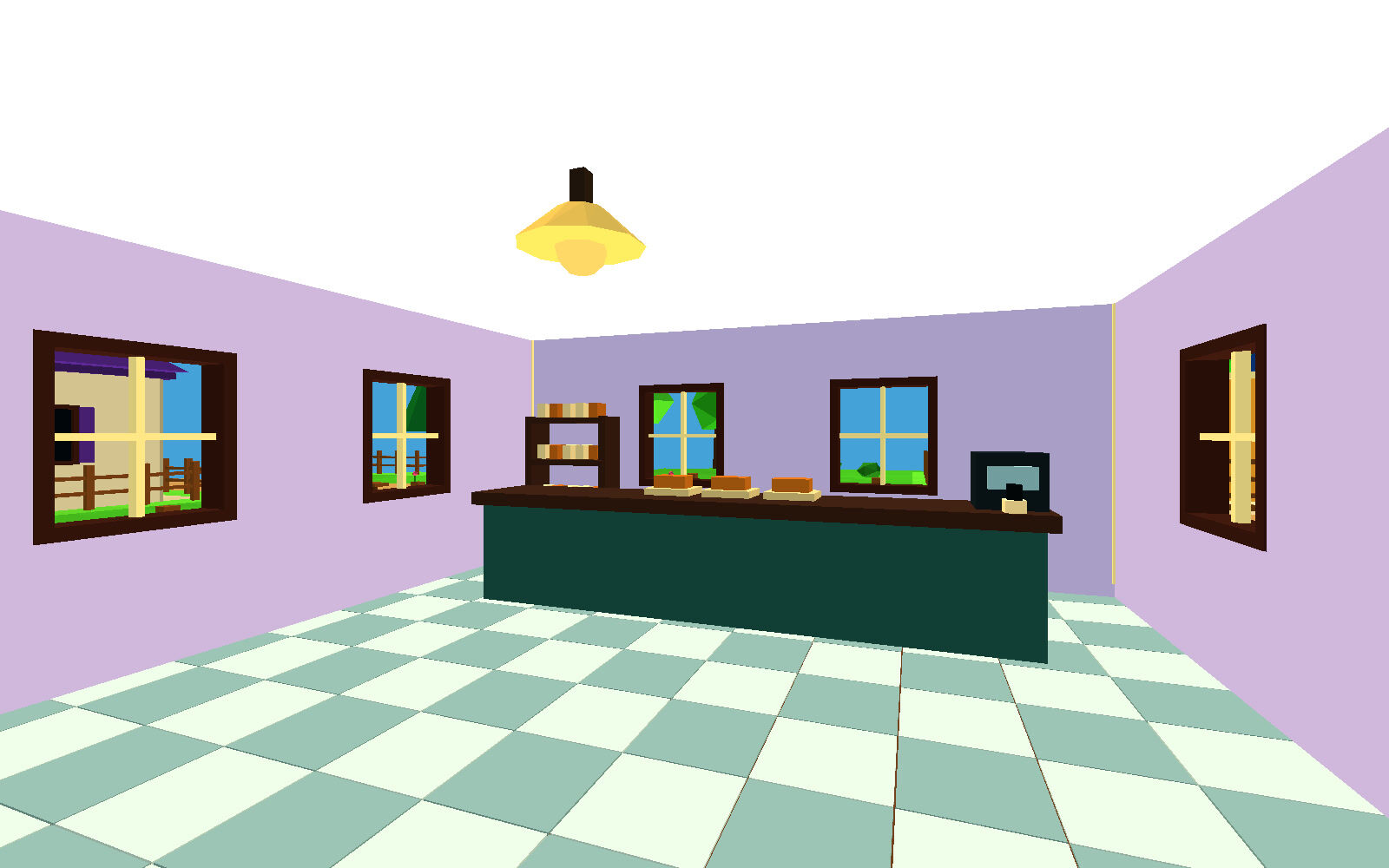
Each house has a single room, painted walls, a ceiling with a light fixture, and its own floor variant: boards, parquet or tiles. Footsteps sound like walking on a hard surface rather than the grass that still lies beneath the house in the map. The windows give a clear view of the street from inside; their outer faces are tinted, so passers-by can barely see what is happening indoors.
An empty room immediately exposed an old assumption in the physics: to a stone, a house was still a solid column all the way up to the roof. A slingshot shot would therefore bounce back before the player could even see it. The trajectory now checks walls, windows and the actual position of the door leaf separately. An open doorway does not stop a stone, and hitting a window makes a glass sound from either side.
A cafe, a workshop and a clock showing Kyiv time
Three distinctive buildings have appeared among the homes: a bakery-cafe, a workshop and a clock house. The clock shows real Kyiv time, derived from server time with the time zone taken into account.
Ordinary houses now contain beds, tables, wardrobes, chairs and armchairs. Seating uses the same E interaction as the outdoor benches: you can sit on a chair, in an armchair or on the edge of a bed. The three special buildings have their own furniture sets, while the cafe has a pastry counter and tables for visitors.
The cafe had to be lengthened after it was furnished. The counter fitted within the dimensions, but left almost no room for a person behind it. The building was extended towards an unused patch of land, the trees were moved aside, and there is now enough space to walk behind the counter.
Karting gets a start and a finish
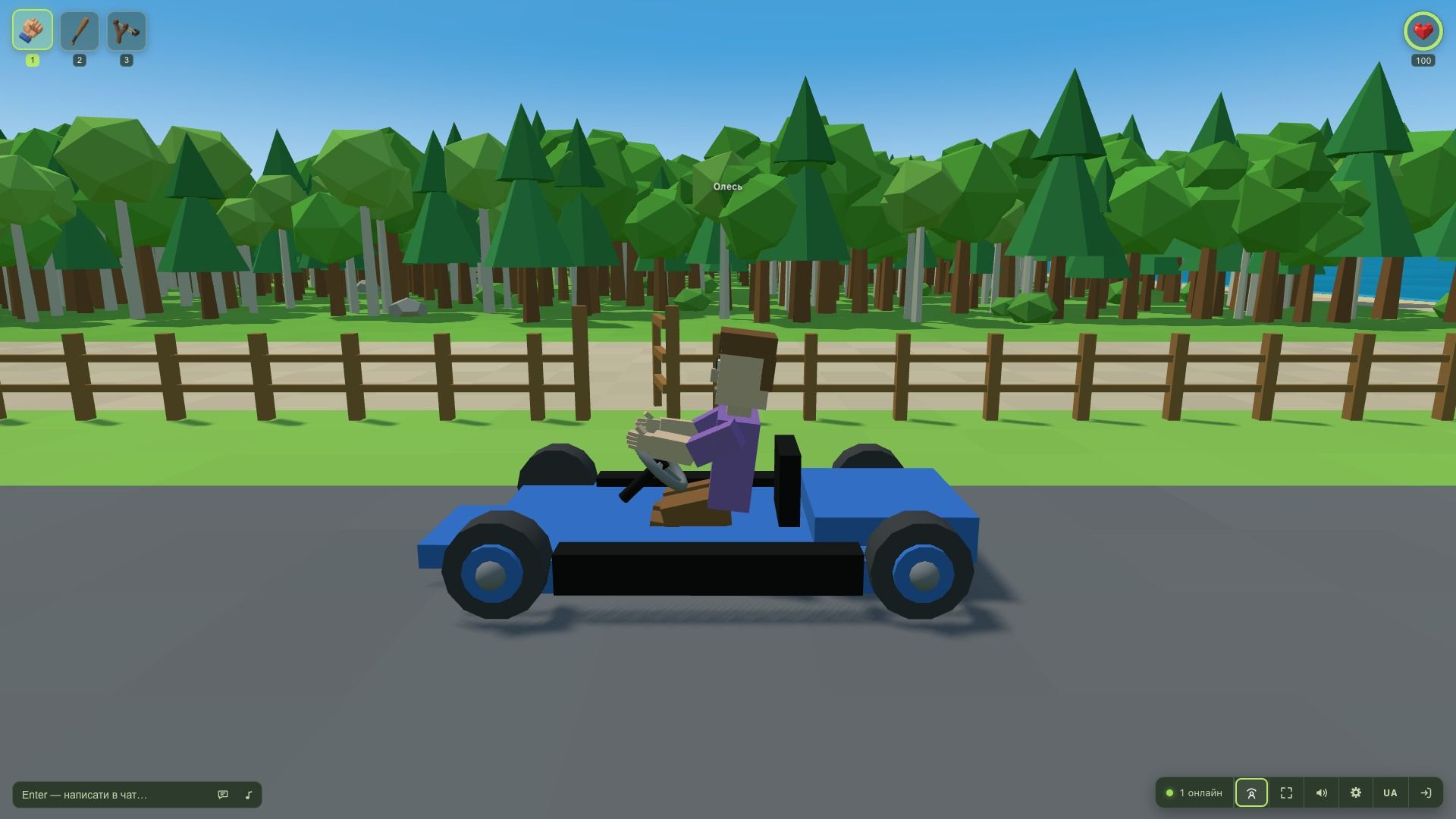
The karting circuit now supports three-lap races. There can be one to three participants: a solo timed run does not need two empty karts to somehow agree to start as well.
Each driver stops before the start line and clicks “I’m ready”. Once everyone present in the starting area is ready, any of them can start the countdown with a separate button. Three seconds, a signal, and you can go. Engines start during the countdown, and the camera lines up behind the kart while still letting you look around with the mouse.
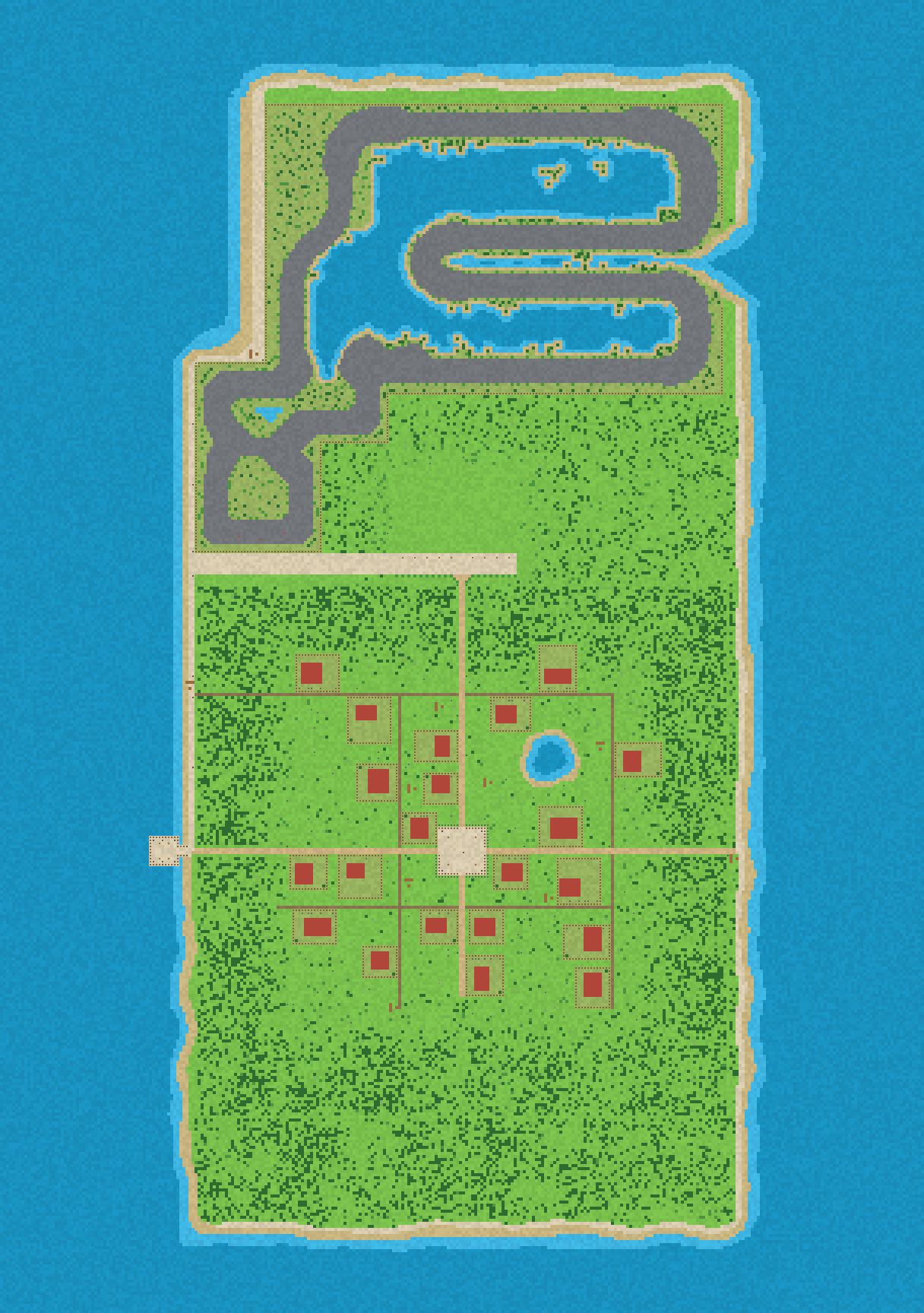
A lap is counted by crossing the checkpoints in sequence and in the correct direction. Driving back and forth across the start line or cutting out half the circuit is not enough. The markers themselves are painted with a system brush in the editor, and their crossing direction is determined by the route between them. The current circuit runs anticlockwise.
The scoreboard stands on the inner island opposite the start line. Coloured markers correspond to the karts, and positions and finishing times appear after three laps. The checkpoints and countdown have their own sounds; completing the distance brings the familiar goal sound and confetti above the board.
Football and karting become peaceful areas
On the football pitch and inside the karting area, weapons are automatically put away, the crosshair disappears and attacks are disabled, including punches. The server enforces this rule, so bypassing the hidden icons is not enough to get around it. Weapons can be selected again after leaving the area.
On a phone, the camera gives you more room to see the pitch and circuit, then centres directly behind the driver when you get into a kart. On a computer, the right mouse button does not enable aiming in a sports area. During a race, the race panel takes the place of the weapon slots.
A skateboard by the square
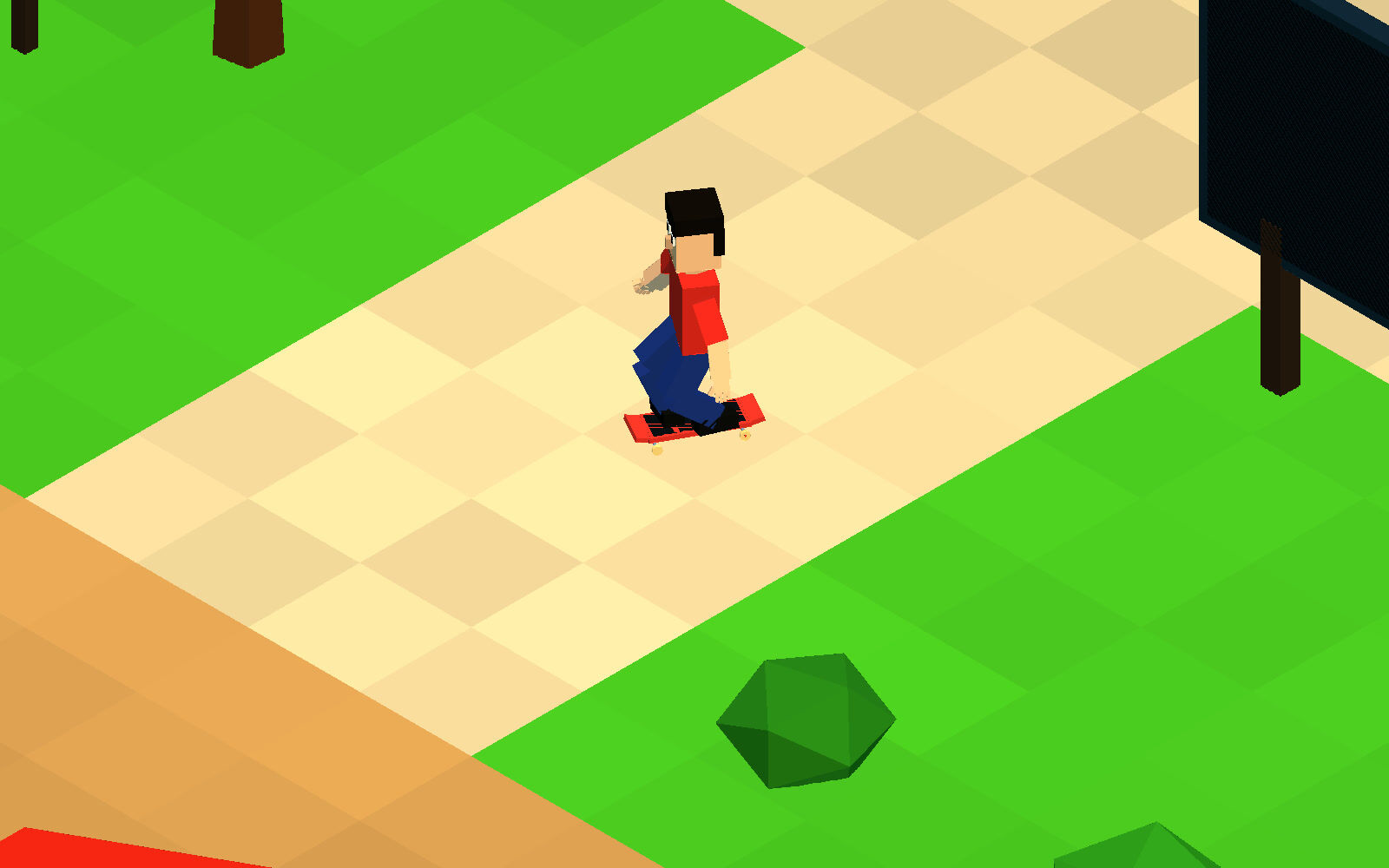
A skateboard spawn area has appeared on the approach to the square with the well. Walk up, press E, and the character steps onto a board. While accelerating, one foot stays on the deck, the other pushes against the ground, and the arms help keep balance.
The skateboard can move backwards and hop when you press Space. Pressing E again lets you step off even while moving, after which the board rolls a little farther on its own. Different boards come in different colours, and rolling, jumping and landing have their own sounds.
Surface behaviour comes from the car’s road logic: hard surfaces are fast, while grass and sand noticeably slow you down. This also fixed a problem with the car itself: it used to slow down on paving, even though it should move just as freely there as on a road. The administrator chooses where skateboards appear with an editor area and sets their number in the world settings.
A jet ski does not turn like a car
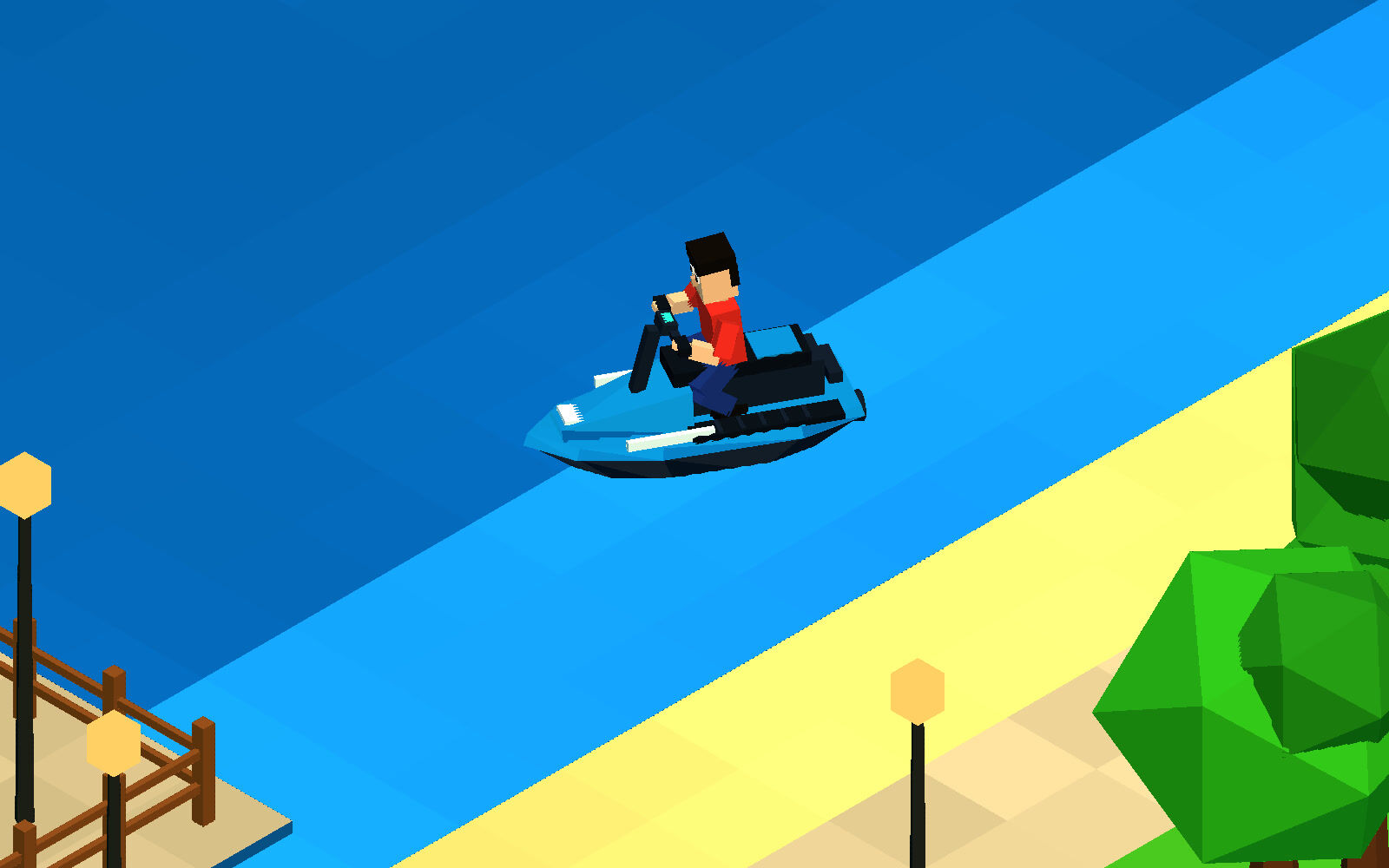
The ocean has gained a vehicle. The jet ski has a pointed hull, footrests, a narrow seat and several body colours. Press E to get on, use Shift for a boost, and reverse after braking to a stop.
Car physics were not carried over. On water, the hull changes direction gradually, and its velocity does not turn with it instantly. Water resistance damps sideways drift, steering is stronger under thrust, and releasing the throttle leaves the craft coasting.
Even at rest, the craft gently bobs. Under acceleration it lifts its nose; under braking it pitches forwards, with the rider leaning along with the hull. The hands stay on the grips and follow the handlebars. Karts and ordinary cars have received the same attachment of palms to the steering wheel.
Spray spreads behind the jet ski: a stream at the rear and water to either side of the hull. Cars and karts have gained exhaust smoke. The jet ski’s sound is synthesised separately using a four-cylinder pattern, while cars retain their V8 character.
Spawn areas are painted on water: each suitable separate area provides a place for one craft. If the area is an elongated rectangle, the vehicle spawns along its longer side rather than across the parking space you drew.
A new island in the east
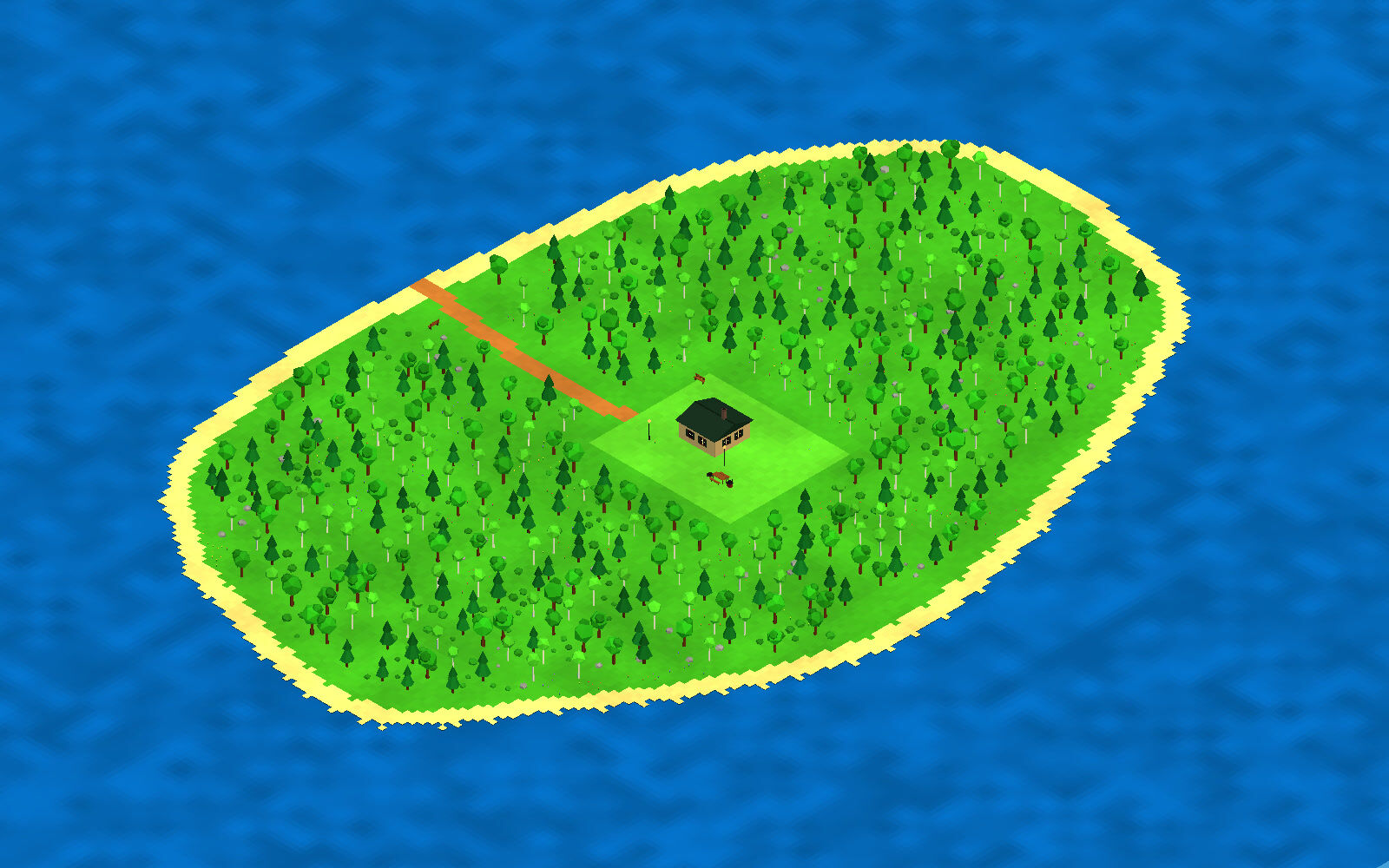
The ocean surrounding the village has grown much wider. The expanded map is now 688 by 592 cells, with another island to the east of the main landmass.
Its outline was first drawn by hand. Inside it, a sandy beach about four cells wide runs around the edge, followed by forest, while a path from the western shore leads to a small house in a central clearing. A barbecue, table, benches and lamps stand nearby.
The first pass looked too sterile: plenty of trees, but almost empty ground between them. Groups of bushes, rocks of different sizes and flowers were added to the forest. The path, beach and space around the house were kept clear so that the island is somewhere to walk, not just look at from above.
Boards where you can leave a message
The editor now has noticeboards and small signs on single posts. You can place as many as you need, move and rotate them, and see which side is the front before placing them.
The text is edited in the game itself: E opens a window, releases the cursor and temporarily pauses character controls. Once saved, the message appears on the board for every player. The administrator can choose a noticeboard, guestbook or welcome board with the logo, and select a colour for a small sign.
A separate checkbox lets everyone edit. While it is enabled, any nearby player can replace the entire text; once it is disabled, the board is available only to the administrator again. For now, a guestbook is a shared inscription rather than a feed of separate messages.
A sign initially had a three-word limit, but even a simple direction sign with “↑ football” and “↖ karting” did not fit. The word limit was removed: there is now room for several lines, and the lettering adjusts to fit. Text is validated before saving, passed to the database as a parameter and drawn as text, so an inscription does not become a command or HTML.
Fewer invisible walls and more natural movement
The diagonal benches by the well had an oversized invisible collision area. Fences had a similar problem: a pedestrian, car or skateboard would stop before touching the wood. Contact is now checked against more precise shapes of the visible parts.
Stone flight near fences received a separate fix. A chicken was visible in front of a fence, but a shot bounced off its old grid-based obstacle. Ground movement was already using the refined shape while the slingshot still read the previous one; fixing one collision system did not mean the other had been fixed too.
Climbing over a fence from a standstill with E has become faster and more accurate. Punches, bat swings, drawing the slingshot and returning the arms to their normal position after leaving a vehicle have been reworked. In first person, you can now see your hands and part of your body: empty hands swing normally while walking, while the arm holding a weapon comes forwards.
Admin settings now fill the screen, with tabs scrolling only horizontally when they do not fit. In the editor, a long panel no longer pushes the tabs off the top, and shortened labels immediately reveal their full text on hover. Commands for returning vehicles and other objects to their starting positions have shorter labels.
ISOBOT: the voice model chooses an action, the game finds the path
The game now includes ISOBOT, a metal robot with glowing eyes and an antenna. The administrator enables it in a separate “Bots” tab and supplies an OpenAI API key and a system prompt. The robot appears in the player spawn area, openly identifies itself as an AI bot and is instructed to speak Ukrainian.
OpenAI Realtime handles the conversation, but individual footsteps are not handed to the language model. It can request a look around, walk to a point, follow a player or open a door, while the existing game pathfinder calculates the route. The server checks obstacles and whether actions are available.
The bot hears enabled microphones only within twenty metres and only from players with voice permission. At the edge of that radius, the model receives the voice without extra attenuation, although other players still hear it fade with distance. Several speakers are mixed into one stream; if everyone talks over each other, the bot is instructed to ask them to repeat themselves one at a time.
Simply standing nearby without speaking does not open an OpenAI connection. When nobody remains nearby, the connection closes. A notice beside the robot explains that voice is being sent to an AI service; this is a different processing path from an ordinary conversation between players.
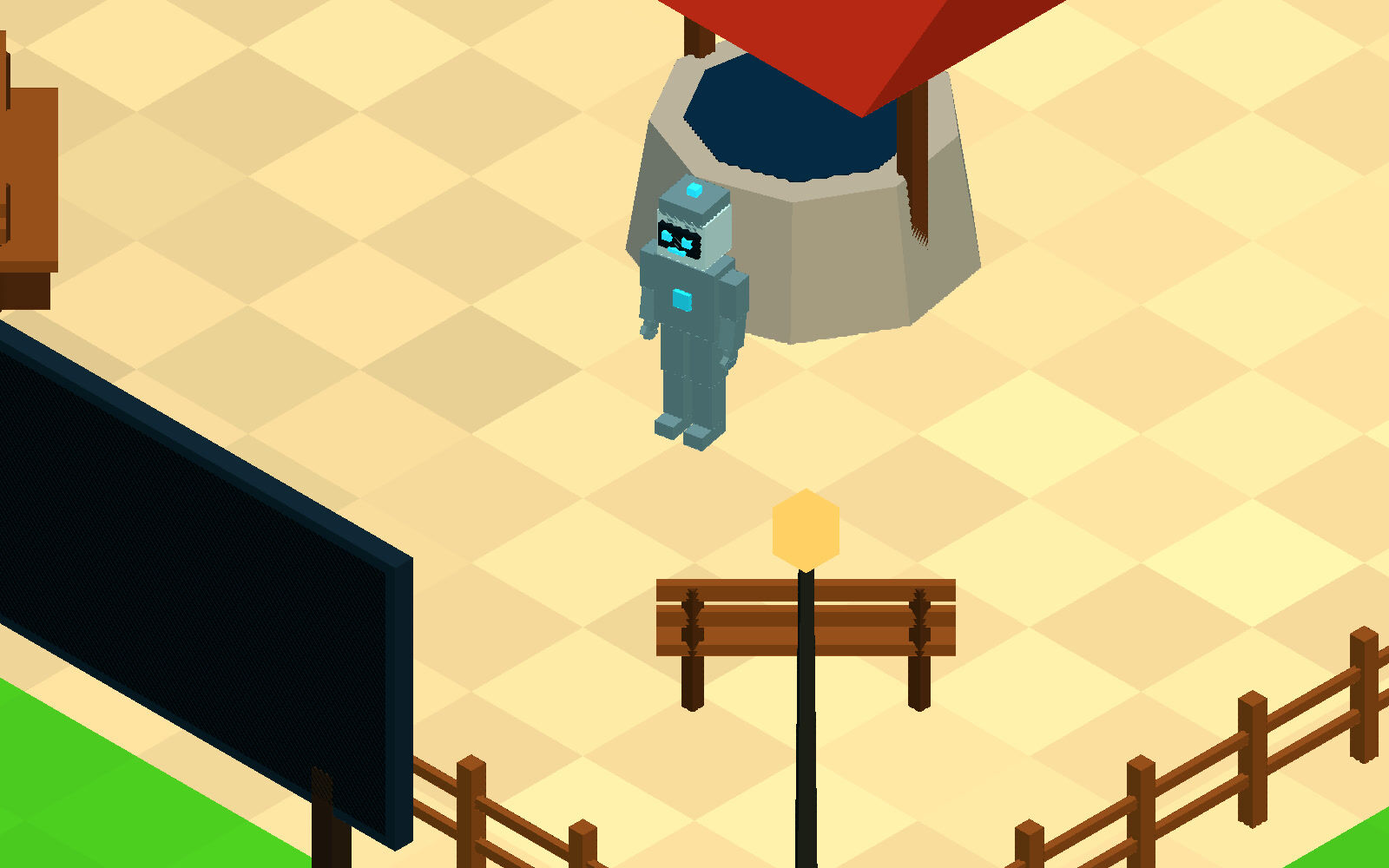
The robot will know it read this in the blog
ISOBOT has also gained a knowledge base from this blog. A small WordPress plugin exports published Ukrainian articles, and the administrator starts indexing them with a button in the game. The access token is entered in WordPress reading settings and in the bot settings; no keys are hardcoded.
The full texts are stored on the server, search runs in memory, and a database copy restores it after a restart. Indexing itself does not call OpenAI. During a conversation, the model receives only relevant excerpts and can read more of an article if needed, rather than carrying the entire blog in every exchange.
In its replies, the bot is instructed to distinguish “this is written in the blog” from “this is here beside me right now”, consider publication dates and recommend the relevant article. Links to the material it used are shown to players. This is the assistant’s first version: it cannot yet drive vehicles, play football or change the world on its own.
The world already looks noticeably different from the one in the previous article. You can visit the cafe, drive three laps, grab a skateboard or head out to the new island. As before, the next changes will appear here in the blog.
Illustrations were prepared from the current game map and models using an offline renderer; lighting and effects may differ from the browser view.