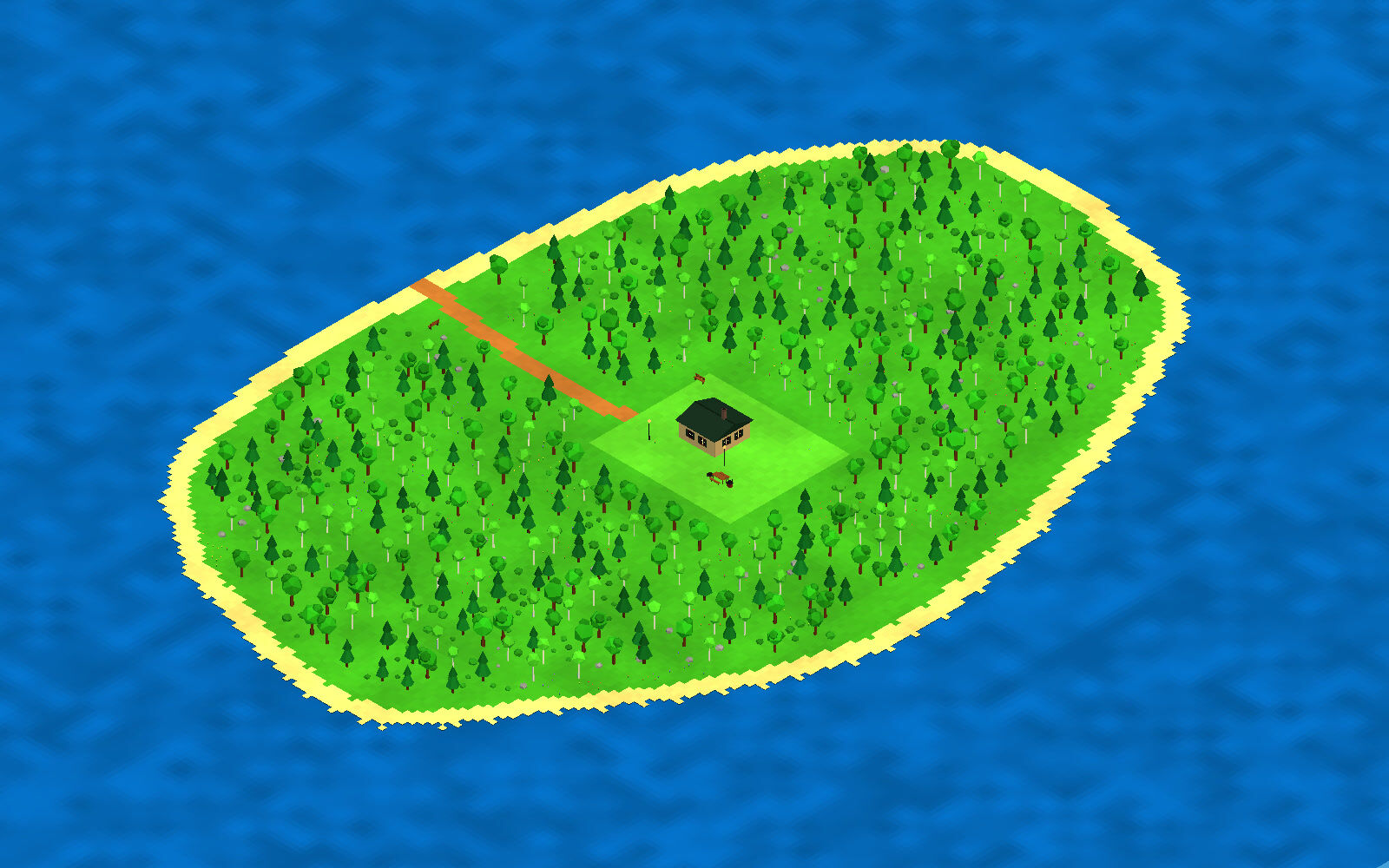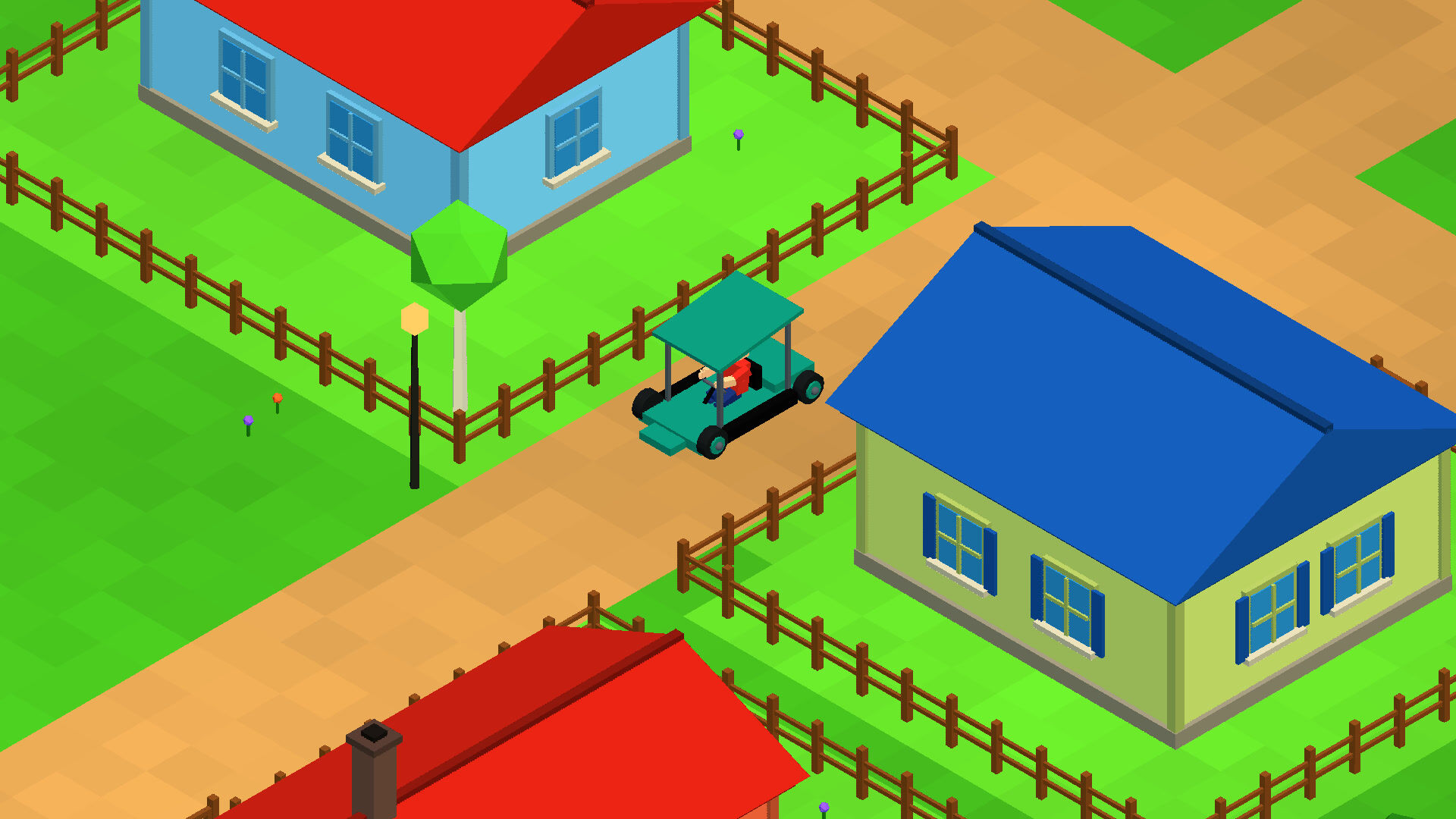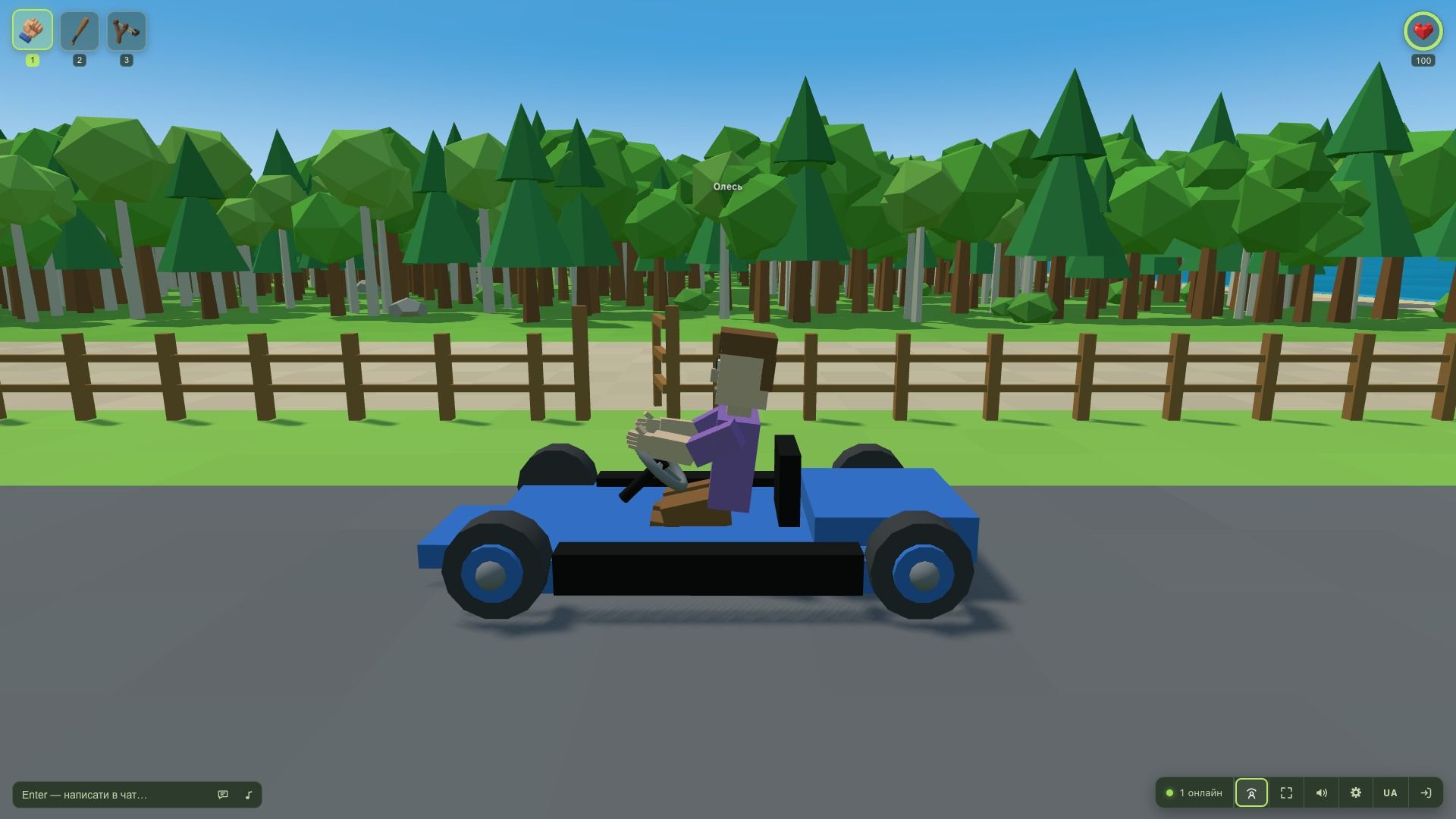


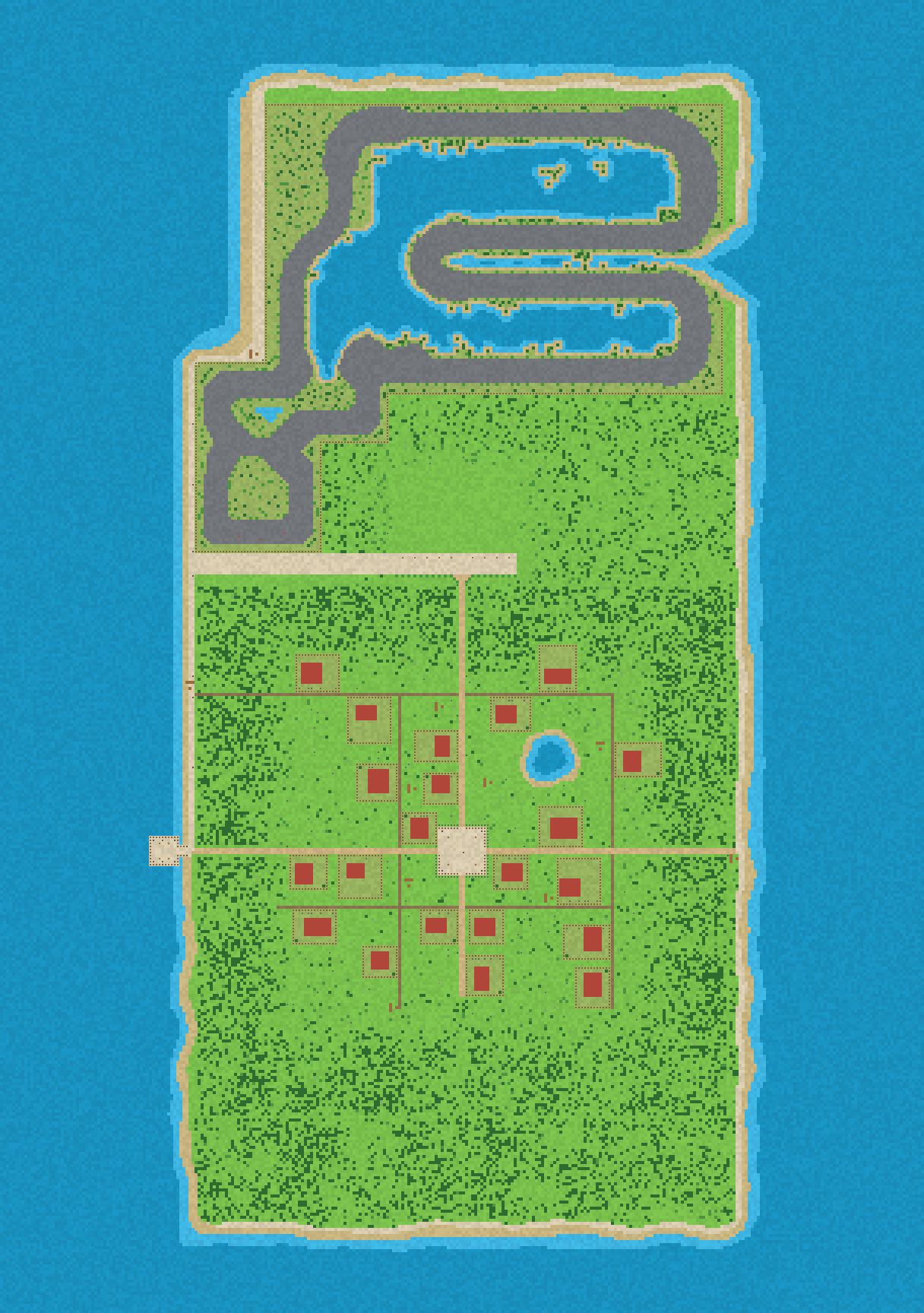
The map grew on three sides, and the ocean closed around it. Isomania is now located on an island with beaches, a promenade, a forest in place of the old roads and a lake in the middle of the karting zone. This is the largest change to the world since the launch.
Forest in place of the old roads
First a road and five lanes that had lost their purpose were removed from the map, and a forest appeared in their place. It was planted not arbitrarily but in the style of the existing belts: the density of the trees, the tendency of trunks to stand close together and the proportion of the three tree variants were measured from the belts already there. In total 1,662 trees and 105 bushes were added, and each strip was planted at its own density.
A lake against cutting the corner
A wide open space remained between the ribbons of the karting circuit, and it invited cutting the corner. The solution grew from 69 cells of water placed by hand into a whole lake system: 1,283 cells of shallows, 3,674 of deep water and 1,059 of sand, following the same rules as the village pond, that is a shallow rim, a dark core and a hem of sand.
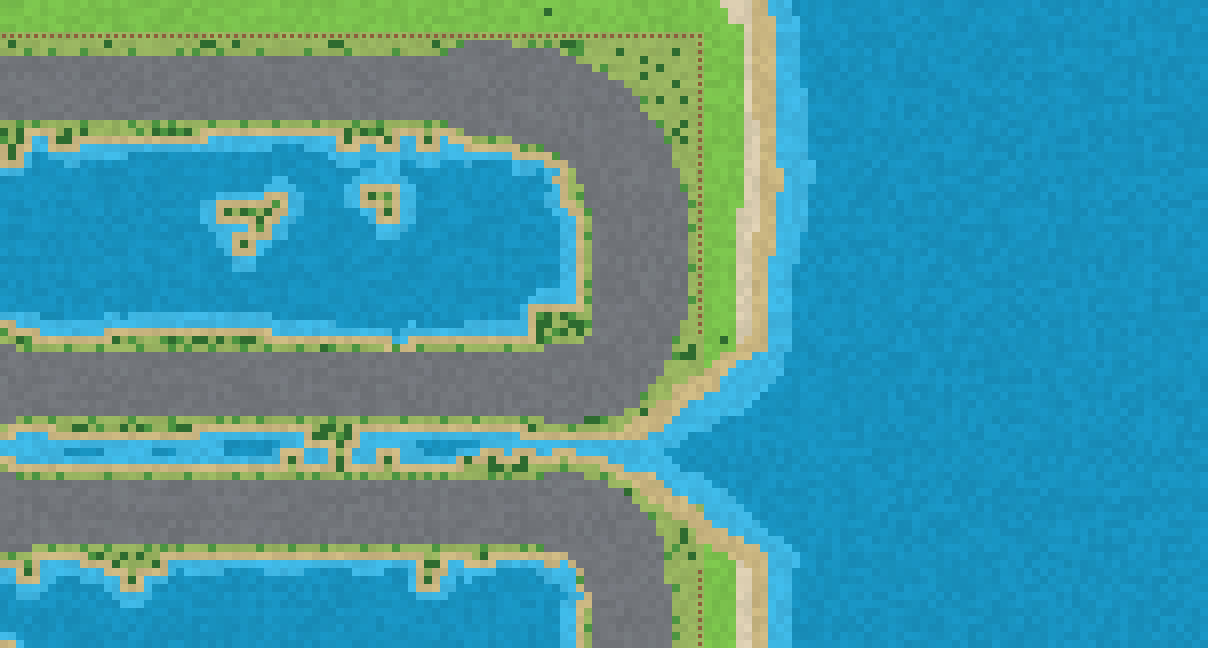
Not a single new line of code was needed for this. Water is impassable anyway, and the circuit already walls off everything solid inside its zone, so a kart bounces off the bank with the same bump it used to take from the fence.
Trees that ended up under water were moved onto the banks, while groups of three or more were kept as islands: an islet under every single trunk looked like a defect rather than an archipelago.
The ocean on every side
The map then grew by 32 cells to the north, 32 to the south and 64 to the east, and every new edge ended the way the western one had long ended, that is in the ocean. The coast is built as a field of distances from the old outline of the land, so the bands of the western shore sweep around the corners in arcs instead of meeting at right angles. The order of the bands is as follows: grass, a two-cell promenade, sand, shallows and deep water to the very edge of the world.
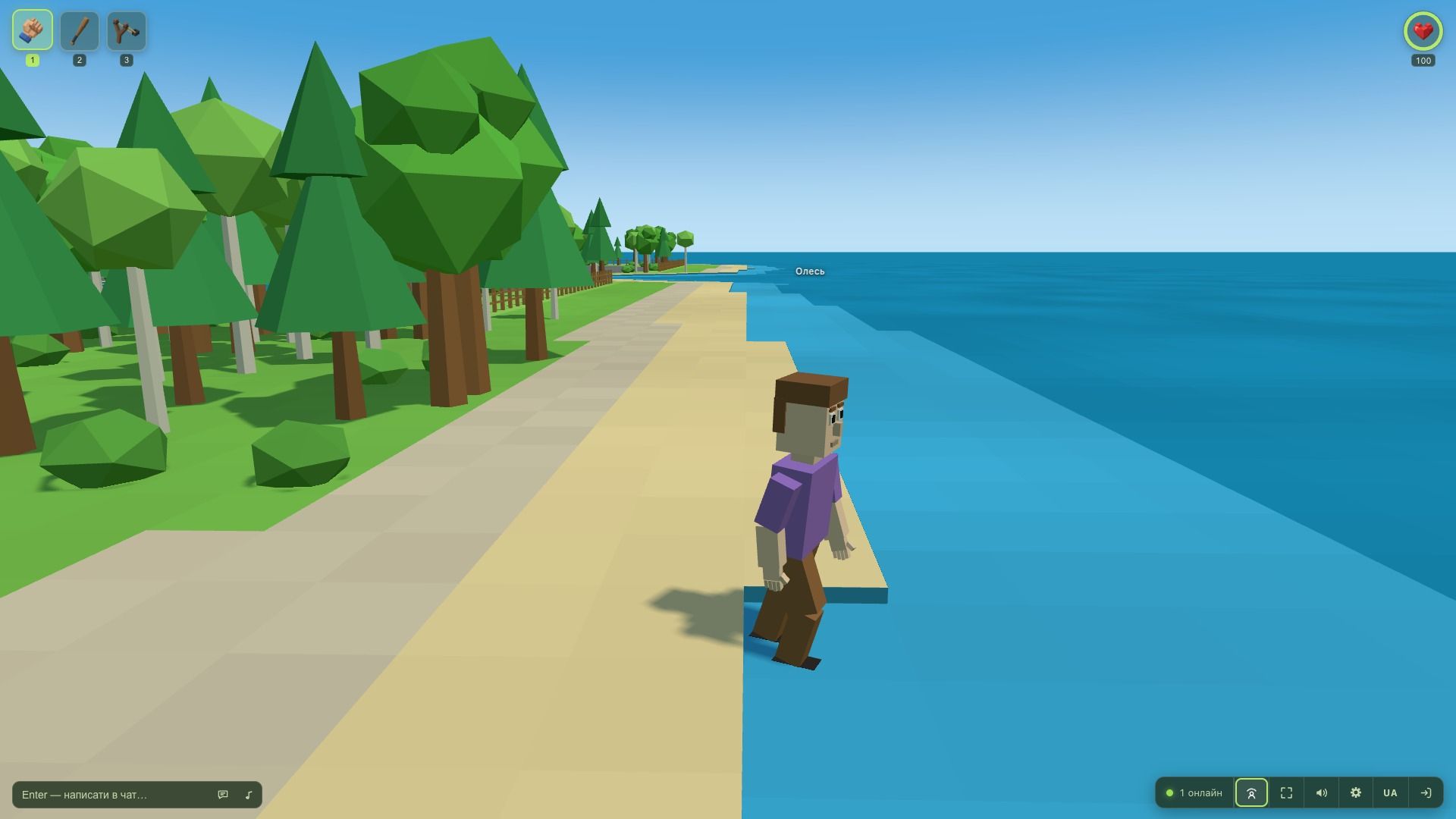
At the wild south-western corner the promenade is not extended artificially but ends in the beach. The old straight stretch of shore below it received a slight curvature so as not to look drawn with a ruler.
The ocean revealed an old bug
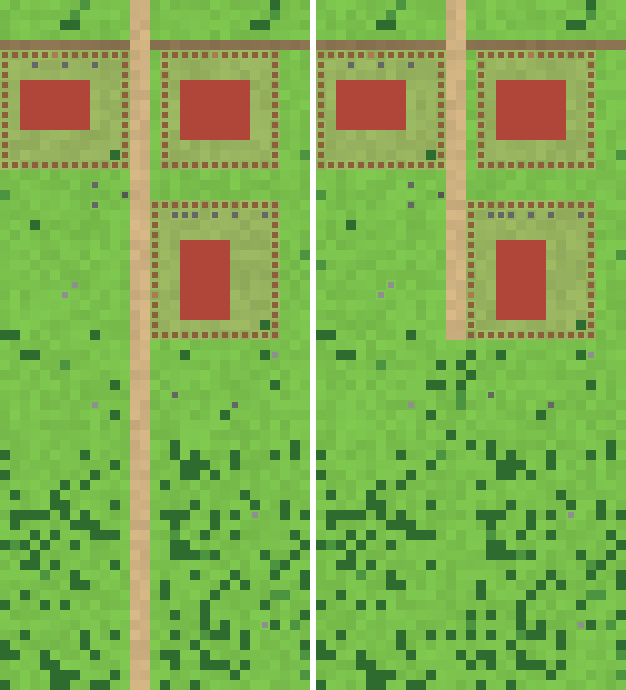
The green plane beyond the edge of the map became an ocean, and immediately after that blue wedges appeared in the ground along the circuit. It turned out that the corner sections of the track had been drawn with the wrong winding order of their vertices, so back-face culling turned every cut corner into a hole in the ground.
For fifteen versions of the map that hole went unnoticed, because there was green grass underneath it and it looked like an intended transition into the lawn. The winding order is fixed, and the corners of the circuit are drawn correctly for the first time.
Manual work on the coastline
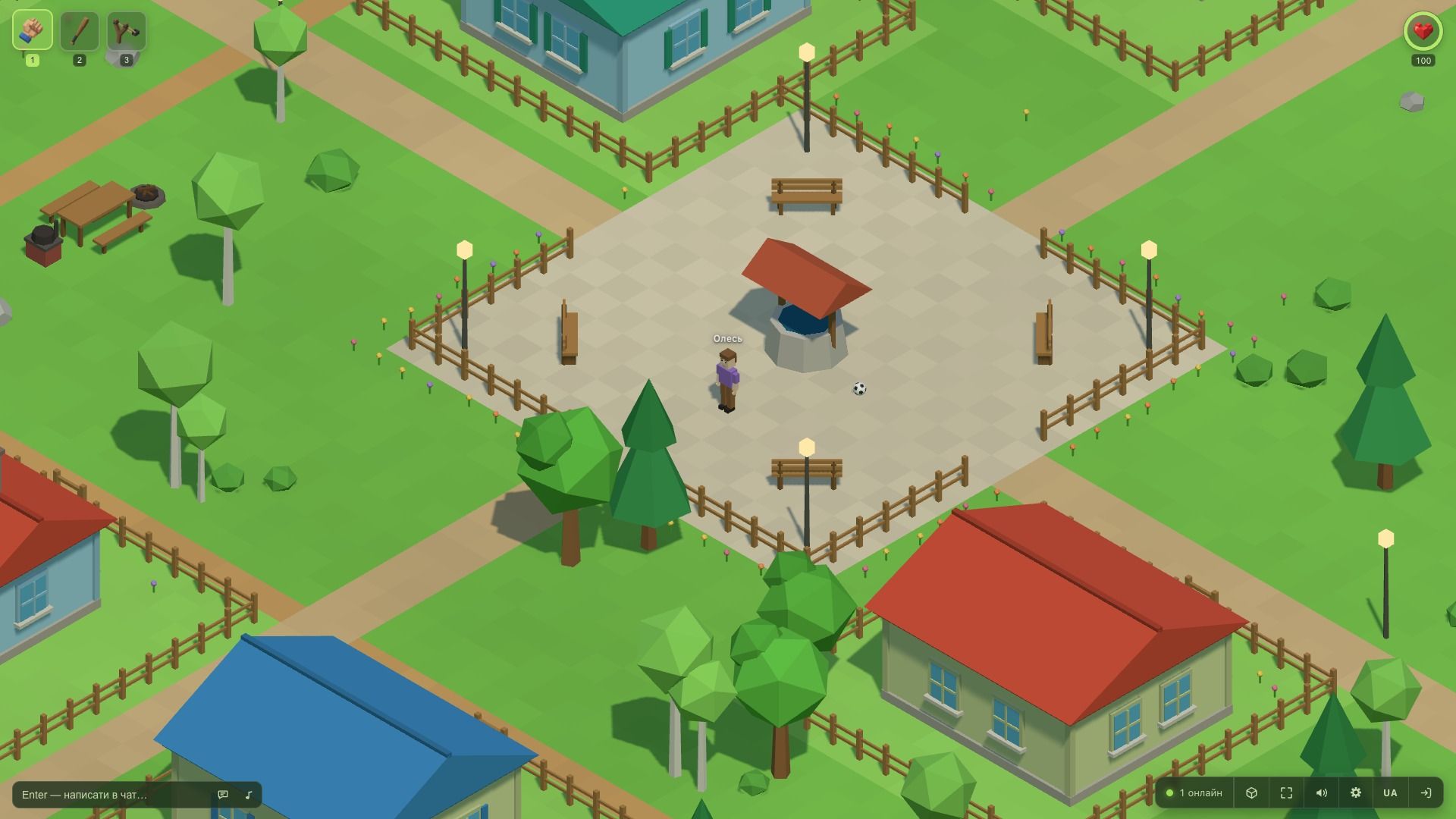
The final pass over the coastline was done by hand in the map editor: 526 coastal tiles were rearranged, that is water deepened in places and beaches shifted in others, 94 trees and 188 bushes were added, 29 unnecessary fences were removed, and a lamp and a picnic table were placed.