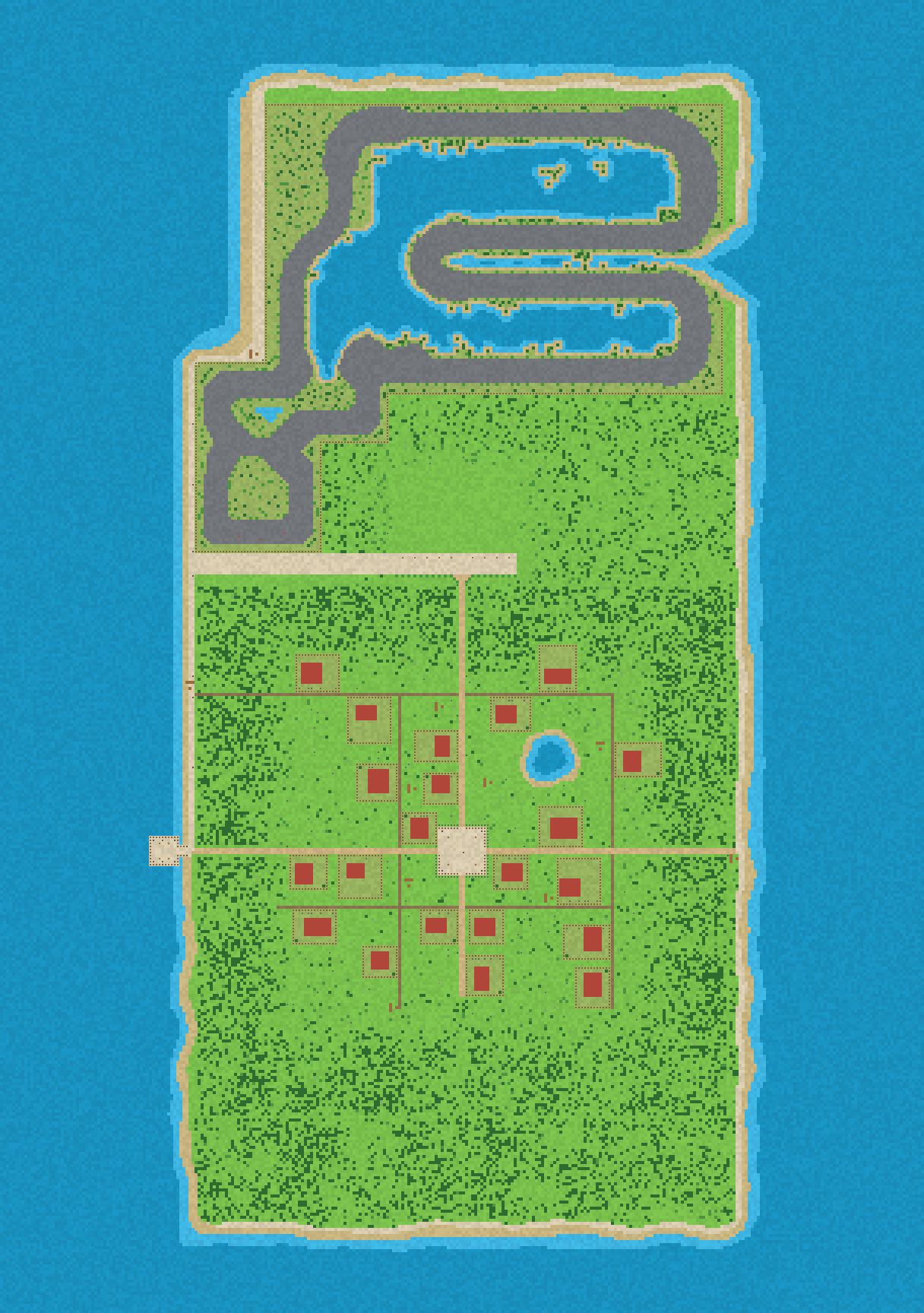


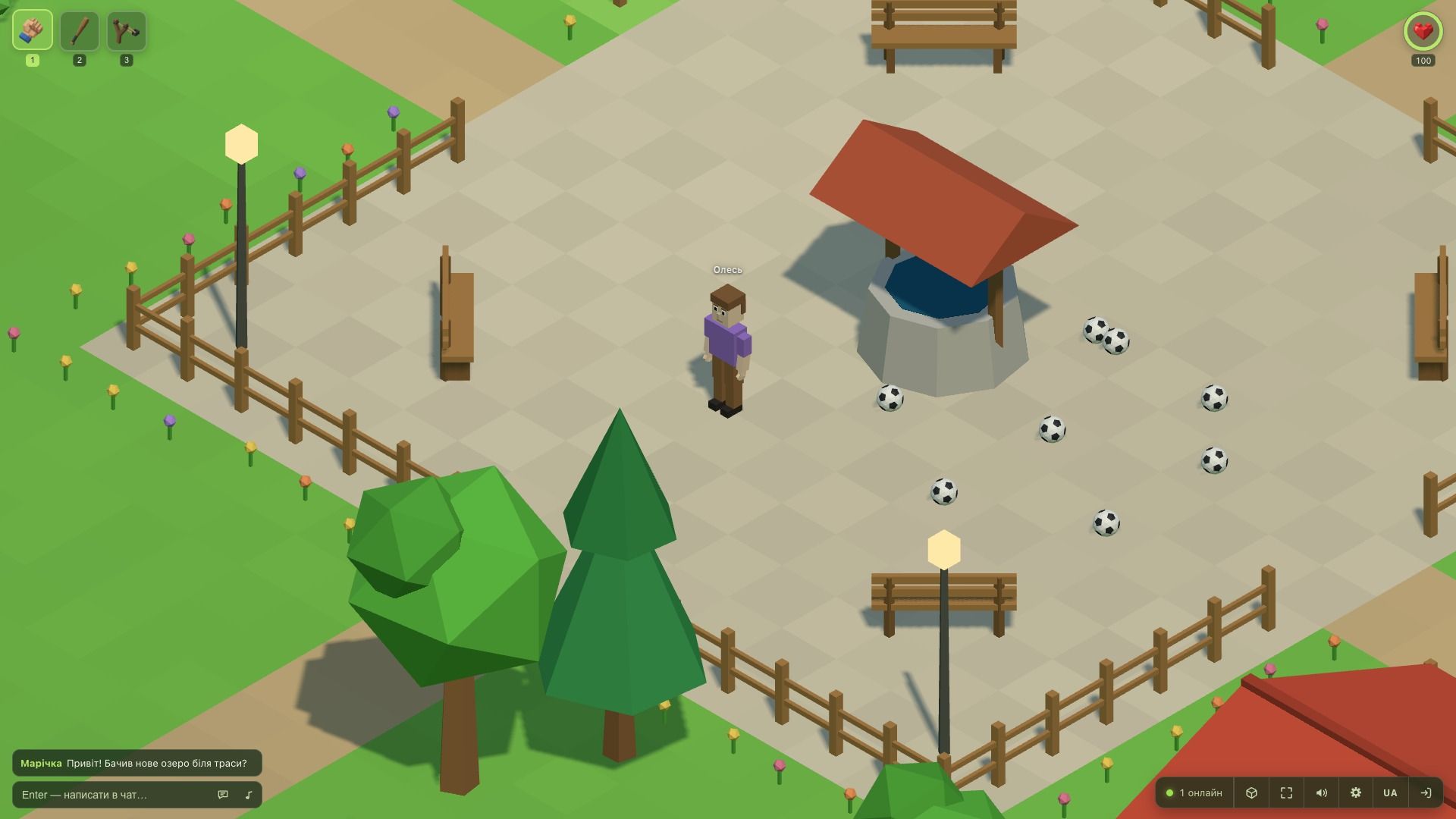
Footballs have appeared on the square by the well. Their physics is genuine: a mass of 430 grams, air drag and different behaviour on cobblestone, grass and sand. A ball can be dribbled and it can be struck, but only the server controls it.
Why the ball belongs to the server
The hard part of a ball that can be kicked is not the physics, which can be taken from a textbook. The hard part is deciding who controls it. There is one ball for everybody, so any disagreement between players is visible immediately, unlike a character, who is mostly watched from a distance.
For that reason the ball is simulated only by the server, and the client does not even report a kick. It does not need to: the server already holds every player’s validated position, so it sees the contact itself. There is no message about a kick, and therefore nothing to forge.
Physics and the strength of a kick
Each surface has its own rolling resistance and restitution, so cobblestone is fast, grass is moderate, and sand kills the ball almost at once.
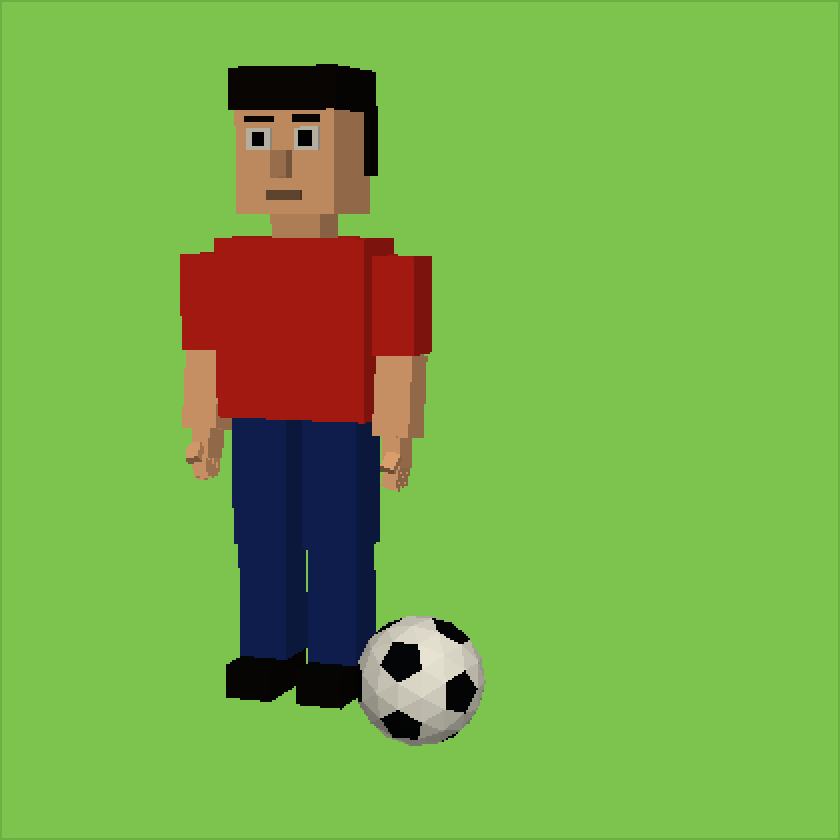
The strength of a kick depends on how the character is moving: from a run the ball leaves the boot at 13.7 m/s, from a walk at 8.1 m/s, from a crouch at 3.9 m/s. This difference is the whole skill of playing with the ball.
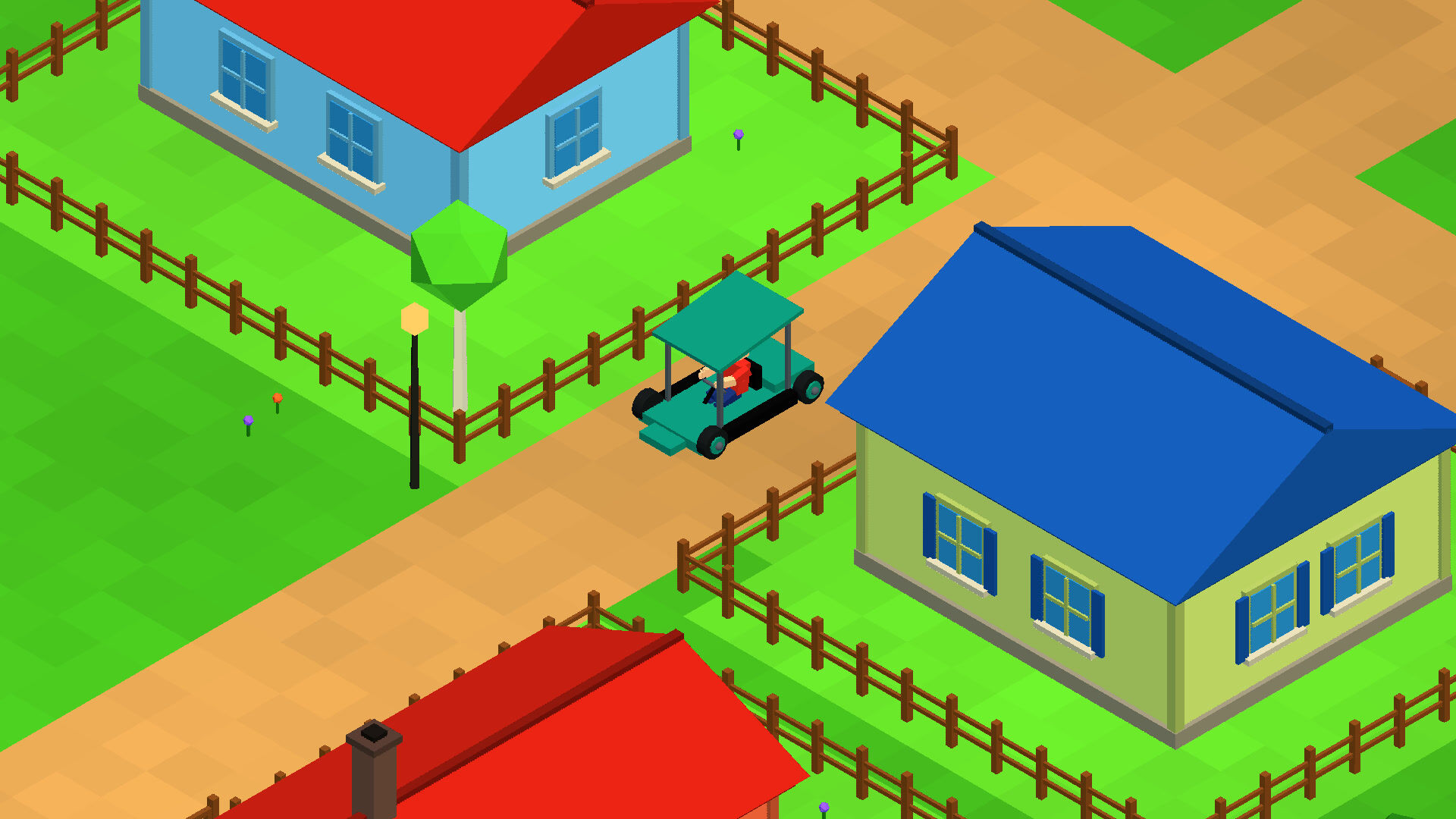
One departure from realism is deliberate: the ball is 36 centimetres across instead of the real 22. At isometric distance the real size gives about 11 pixels, and the ball looks like a dropped pebble. The choice is recorded separately so that it is not later “corrected” back. It has its price: a larger ball brakes harder against the air, so the range of a hard kick fell from 61 to 34 metres.
Contact dribbles, the E key strikes
At first any contact was a kick, and every brush of a boot sent the ball 3.7 metres ahead, which reduced the game to running after it. Measurements settled the question: over twelve seconds of running with the ball the old restitution gave 10 touches, the new one gives 23, and the ball stays about a metre in front of the boots.
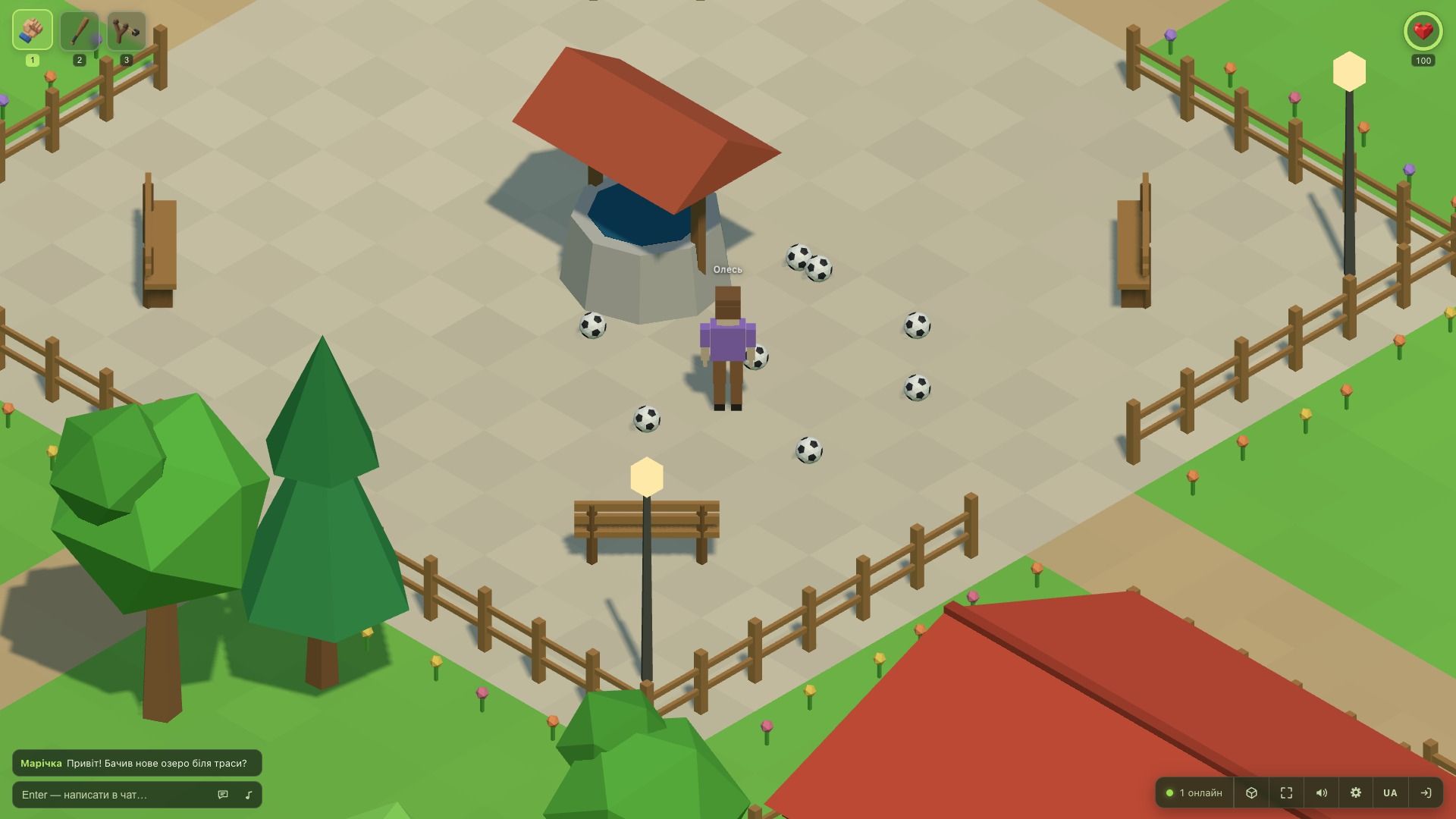
Now these are two different actions. Contact dribbles the ball, and the E key strikes it: 14 m/s standing and 17.7 m/s from a run, exactly along the direction of the gaze. A ball lying directly behind the back is not affected by the key.
A tour for newcomers
A player who has just arrived sees a chat panel in one corner and nine buttons in the other, and none of it is explained. Now a short tour starts on the first entry: four hints that point at interface elements in turn, or five if the player has been granted a microphone and a camera.
The record of a completed tour is kept in the account rather than in the browser, so a tour completed on a computer is not shown a second time on a phone. It can be closed at any moment, but the game asks first and in the question itself explains where to find the tour later.
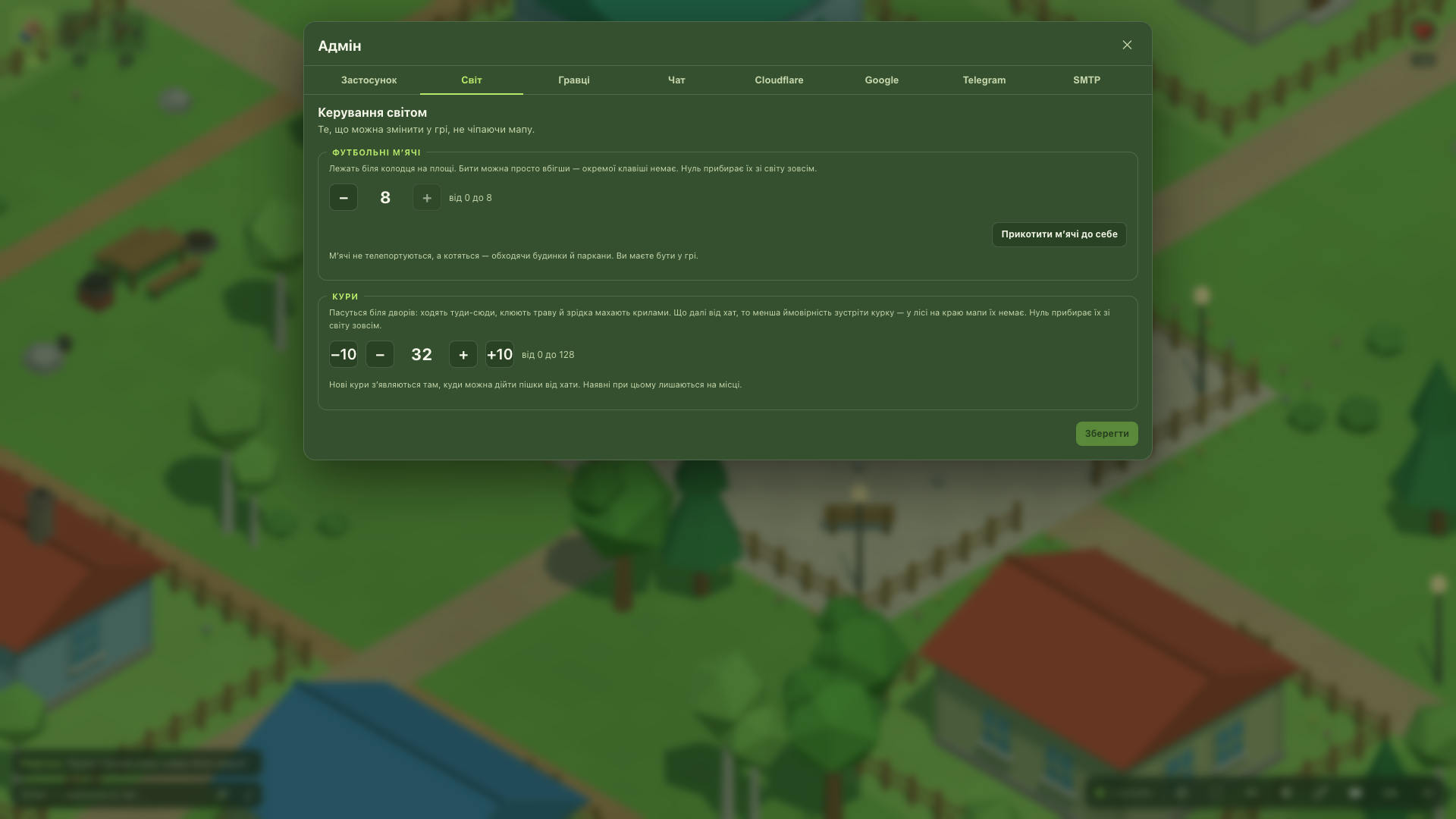
The balls obey the administrator
The administration panel gained a setting for the number of balls on the square, from zero to eight, and a button that calls all the balls over to the administrator. Summoned balls do not roll in a straight line but plan a route around the houses, and a ball wedged in a corner gets out of it and plans a new path.