

The ground underfoot has stopped being uniform: five surfaces now sound different, shallow water can be waded through and deep water can be swum. In addition, football arrived in the game, and the goals on the pitch now count a goal.
Every surface sounds like itself
Until now the footsteps of the whole village sounded the same. Grass and the yards kept the original, while the road, the cobbles, the dirt path and the pond rim received footsteps of their own. Seventy-two takes were recorded, and they were cut by measurement rather than by ear: a boot on packed earth sounds 25 decibels above the silence of the room, and on stone 43, so an automatic search for the start of a sound in such material answered “one event, nine seconds long”.
A sixth set of sounds is used when there is no ground underfoot at all, and it plays off the arm strokes during swimming.
Water became a place rather than a wall
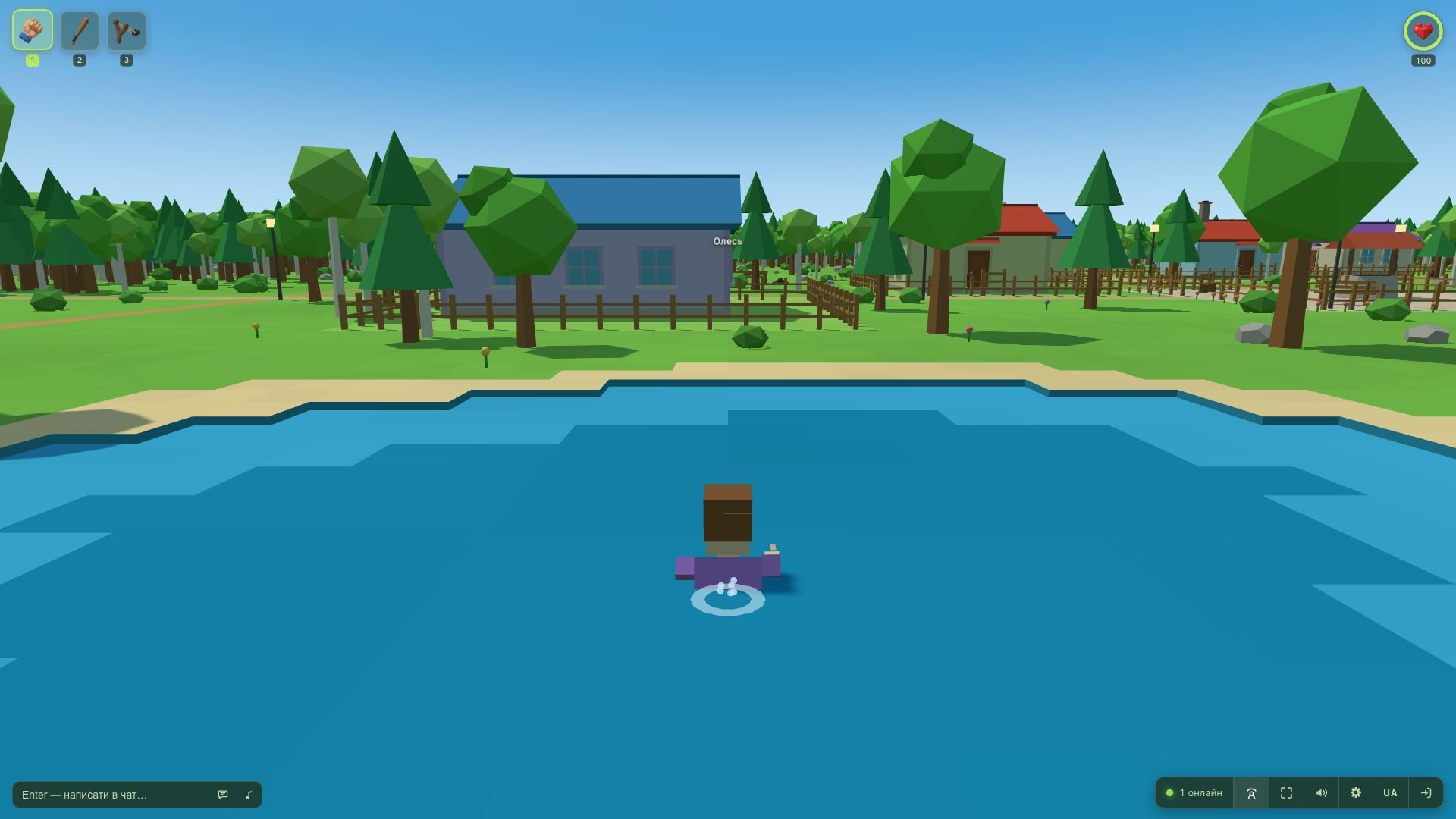
The character enters shallow water roughly up to mid-shin, and that depth was not set by hand but derived from the geometry of the leg. In deep water the character swims: the torso pitched forward, the shoulders at the surface, the arms stroking one at a time.
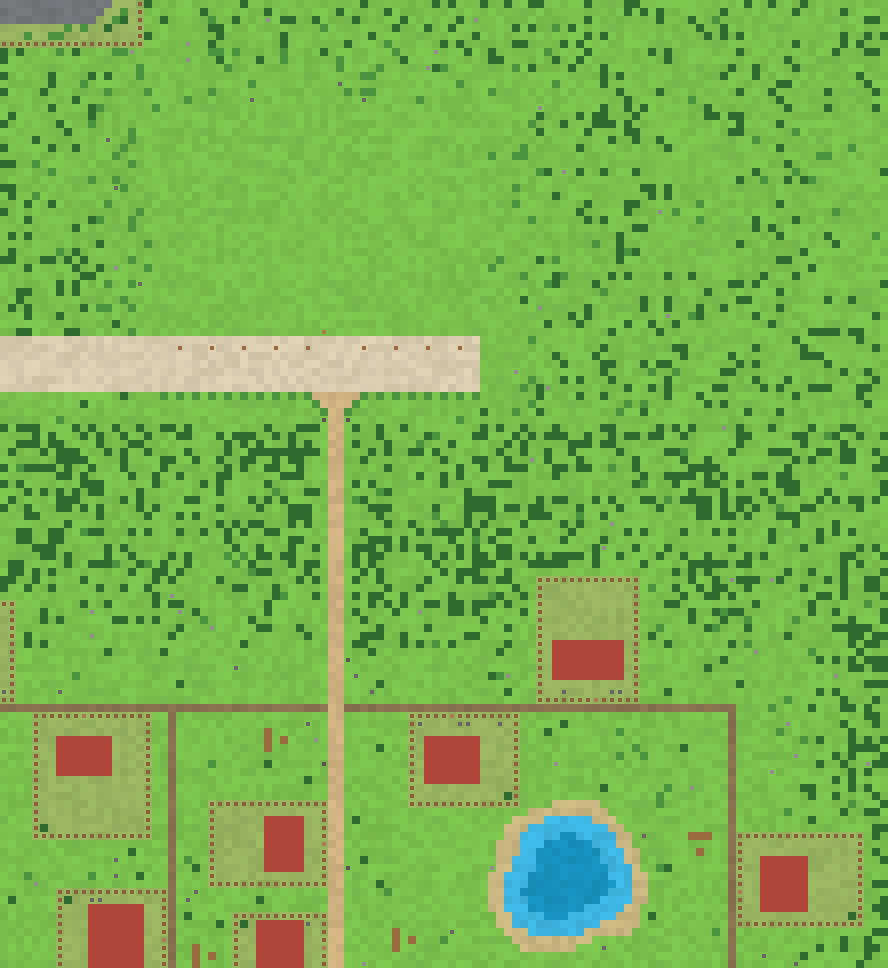
For the rest of the game water stayed impassable, as it was: a hen must not paddle, a ball must bounce off the bank, a stone must sink. The exception is described in a single place in the code, where both moving objects read it, so nothing else had to be told about it.
Football and goals that count
Football arrived in the game with a large scoreboard, which responds to goals with a sound and a visual notification. The goals themselves, and the mechanics of what seems such a simple game, were rebuilt twice. At first only the two posts were an obstacle, so it was possible to leave the pitch straight through the net. Walling the goal up completely did not work either, because then it could not be entered at all. The third variant proved right: a player is stopped by the net, while for the ball the net does not exist, because the ball is taken off the pitch the moment it crosses the line.
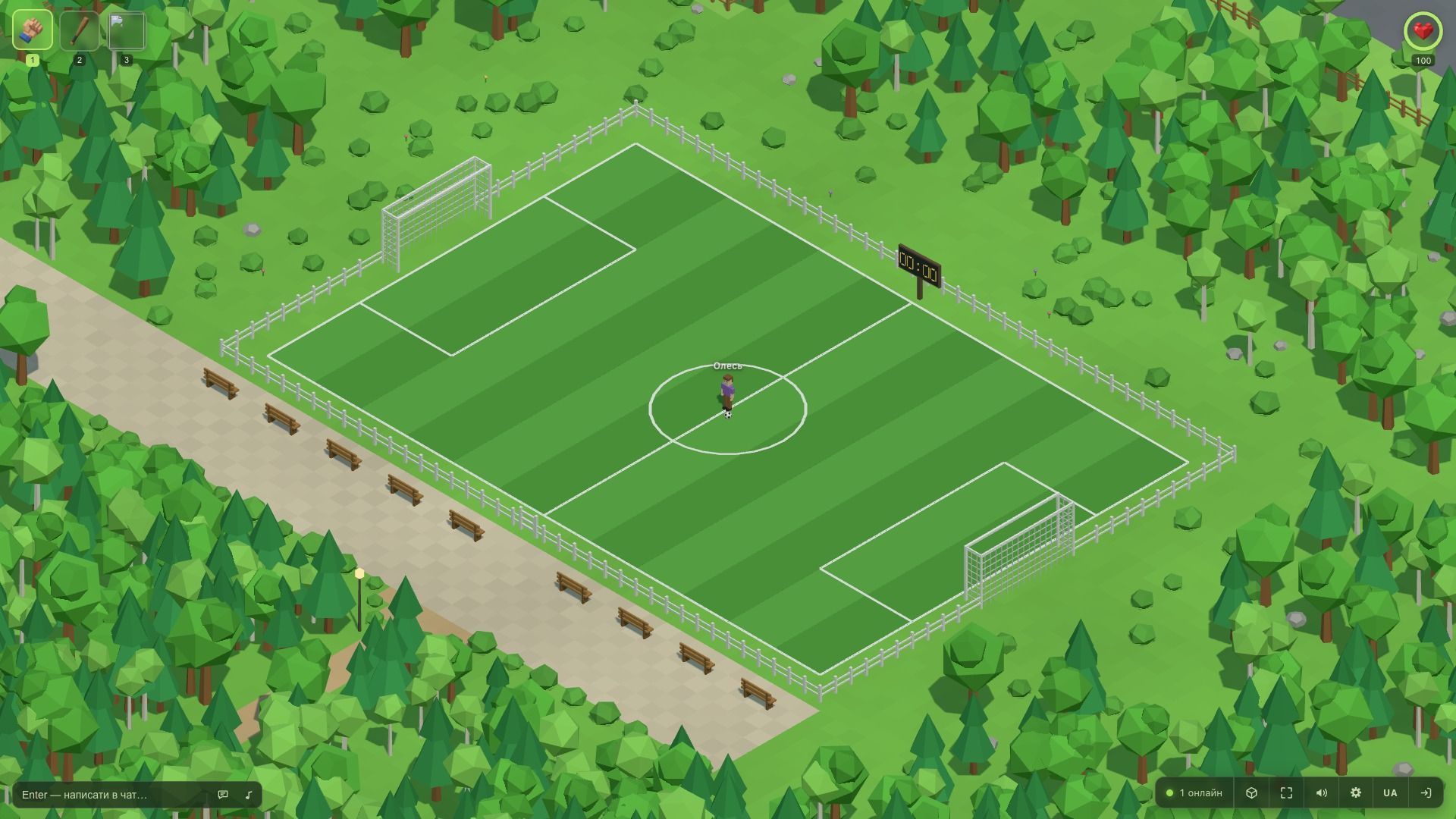
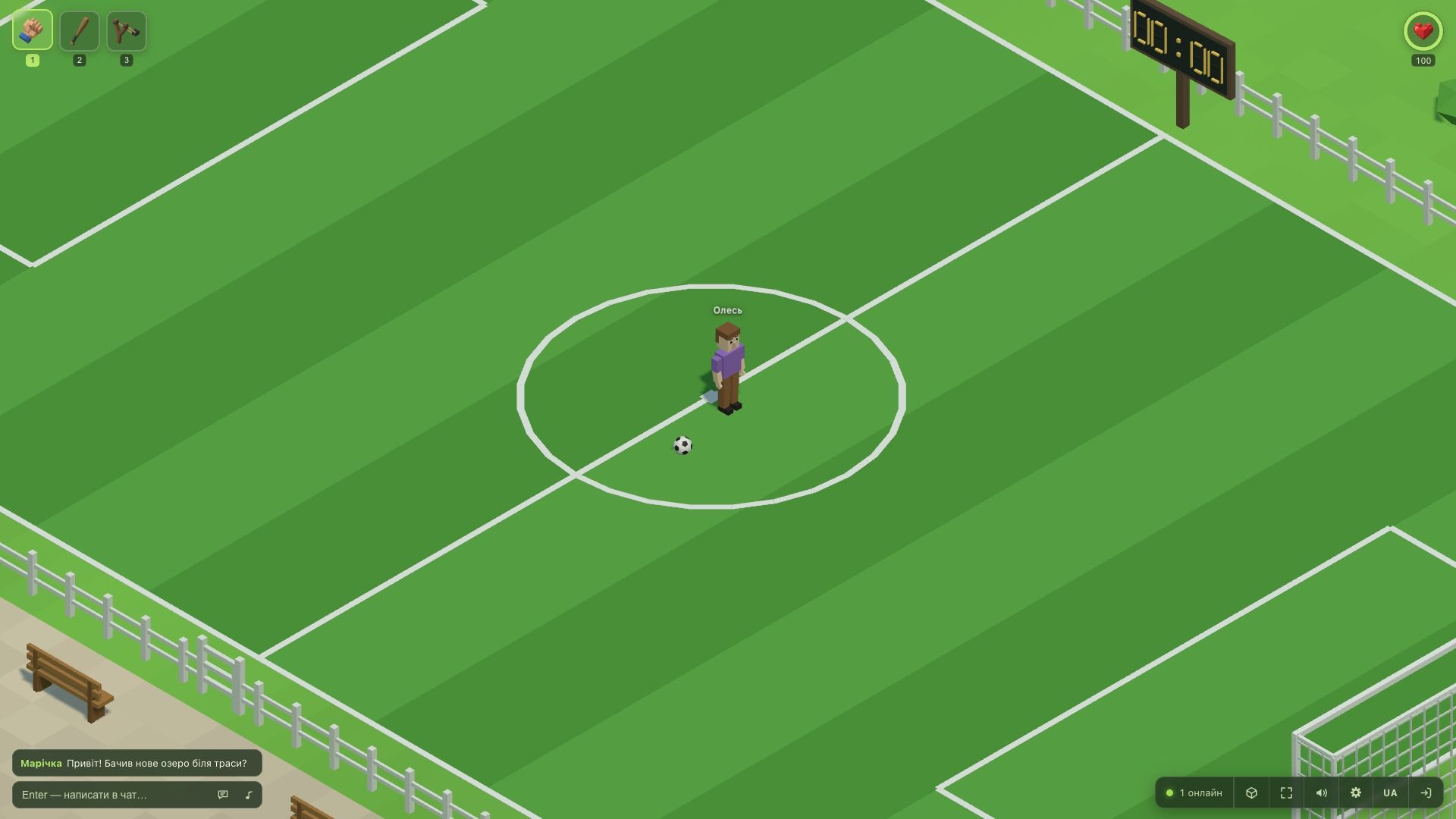
Goals were also failing to count for two reasons at once. The posts had been shifted onto cell centres, so inside the drawn seven metres of the goal there stood half a metre of invisible wall on each side. Besides that, a goal was checked once per tick, when the ball was already half a body past the line, that is effectively in the netting, so every goal looked like a shot passing clean through. The frame is now back on the cell boundaries, and the crossing of the line is checked inside the ball’s own eight-centimetre substep.
The ball also learned to stop. Previously it twitched in place within two to eight centimetres until somebody kicked it: a nearly motionless ball received one coarse physics step per whole tenth of a second, and a dip below the surface was compensated by a lift upward, which granted extra height every time.
Beyond the pitch
The yards (their fences) received gates, vaulting a fence at a run received its own sound, and a wood was planted around the football pitch. The map editor meanwhile learned to show which way a bench will face before it is placed.