

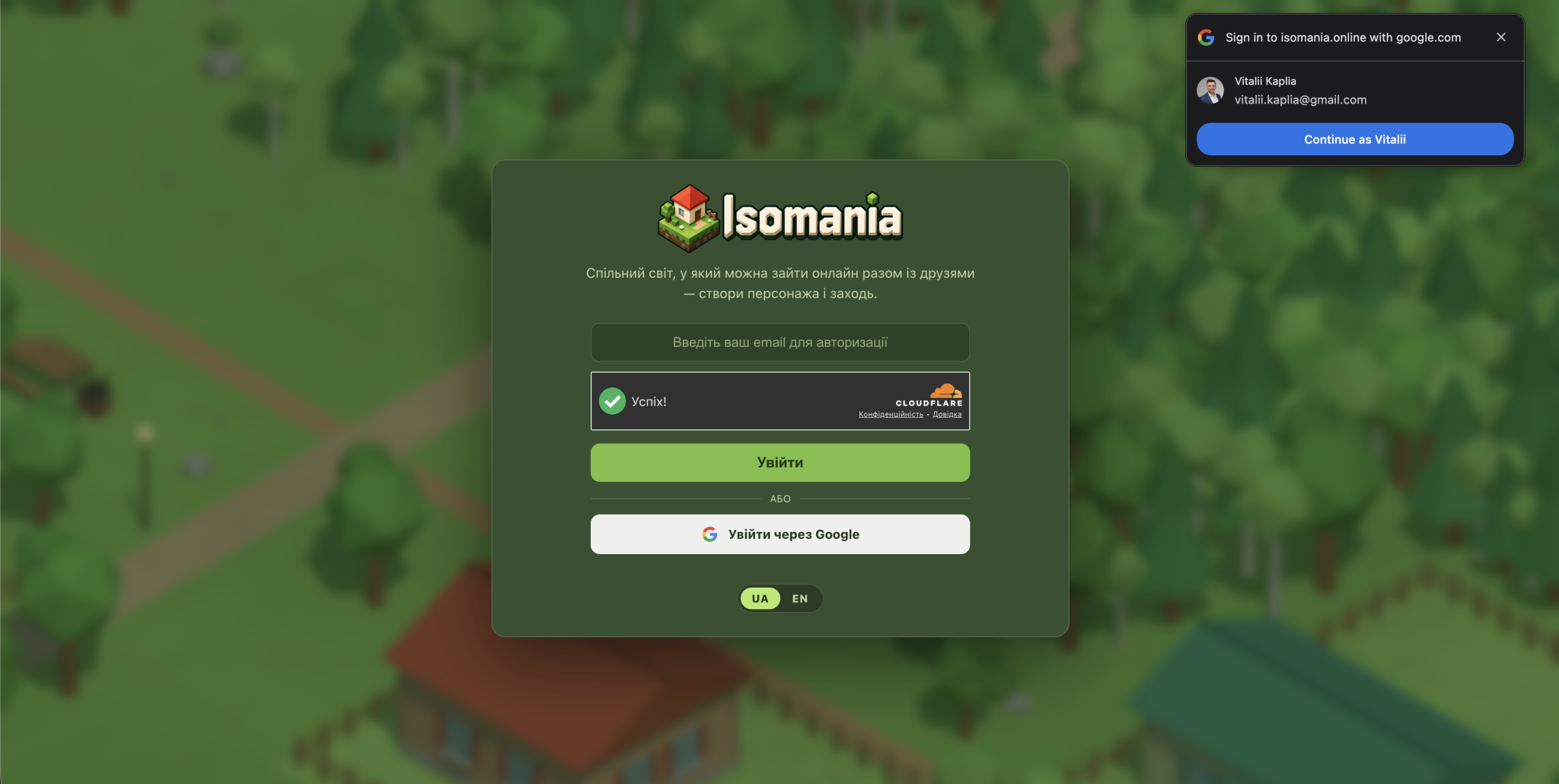
The game now has voice. This is not a global voice chat across the whole world, but a conversation that can only be heard nearby, as on a real street. Along with it the interface gained a second language, and signing in gained one more option.
Why voice goes through the server
Voice chat works through the server rather than directly between browsers, and the reason has to do with privacy rather than with technology. With a direct connection (P2P) every participant would see the other’s IP address. Besides that, once two browsers are connected directly, the server can no longer stop the audio, which means the audible radius would become a request to the client rather than a rule.
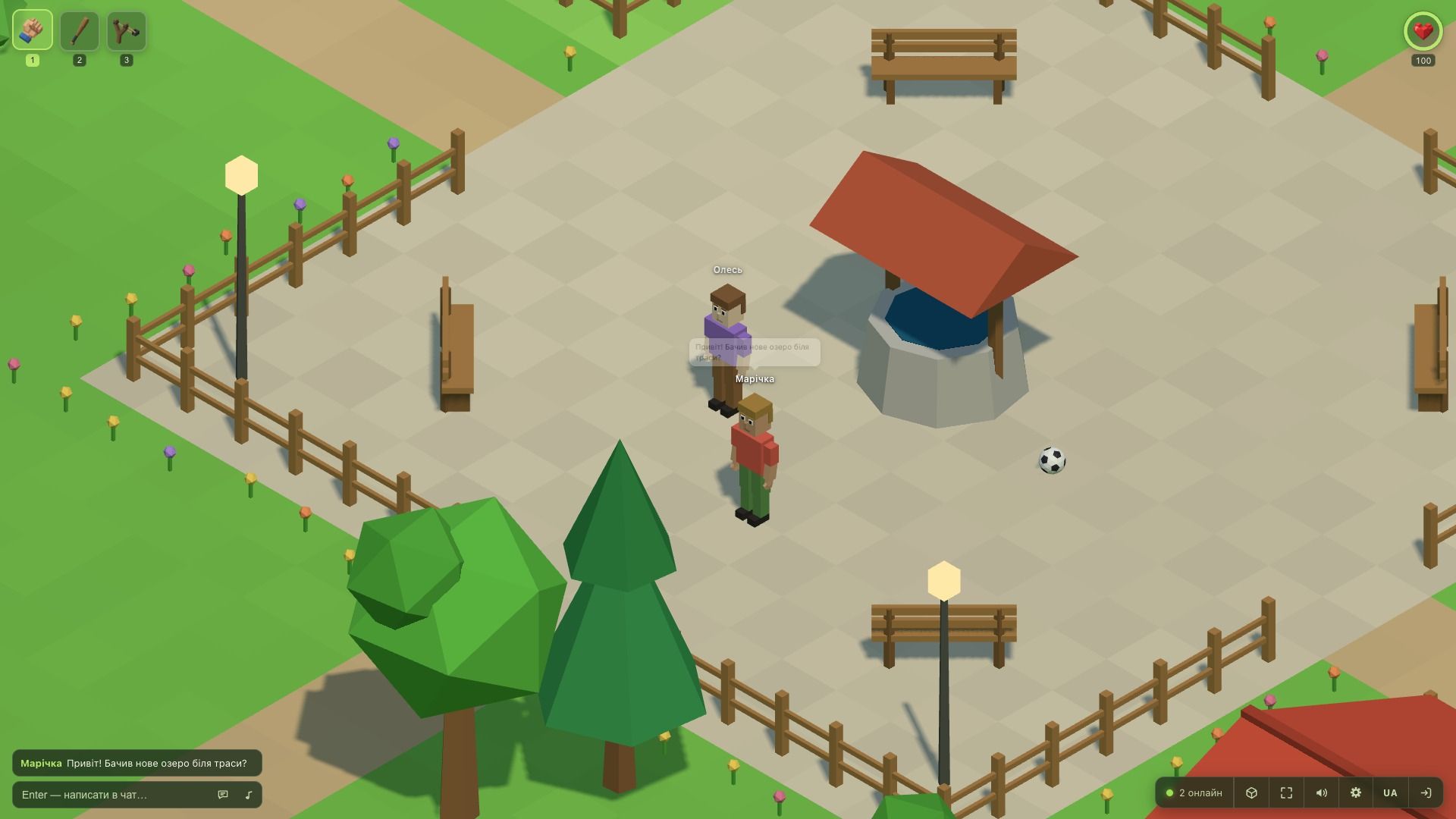
So it is done differently: the server reads only the header of the audio packet, checks the distance between players and copies the data on. It never decodes the audio and never stores it. The audible radius is enforced where it cannot be bypassed.
The right to speak is granted by an administrator to an individual player. Anyone can listen, no permission is needed for that.
Two interface languages
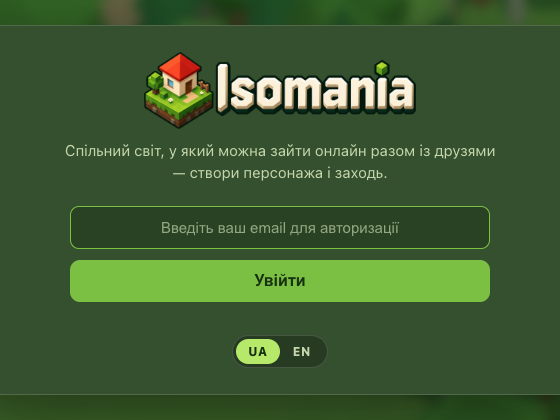
The interface is now available in Ukrainian and English. The Ukrainian strings are at the same time the translation keys, so if a translation is missing somewhere, the player sees an ordinary Ukrainian phrase rather than a technical identifier. Translation completeness can be checked automatically.
A head that turns separately from the body
For the first-person view the character gained a separate head rotation. What is stored is not the direction of the gaze itself but the offset of the head relative to the torso, so when the body turns, the gaze moves along with it.
The character also gained an actual neck: there used to be a three-centimetre gap between the head and the torso, unnoticeable until the camera made it possible to walk right up to a face.
Since the keys no longer set the direction of the gaze, the character learned to walk sideways and backwards. Previously other players were shown a forward stride played over a body sliding sideways.
Signing in with Google
Email sign-in was joined by Google: both ordinary OAuth and One Tap, where the browser itself offers an account in a single touch. The account in the game is still identified by the email address, the road to it has simply become shorter.