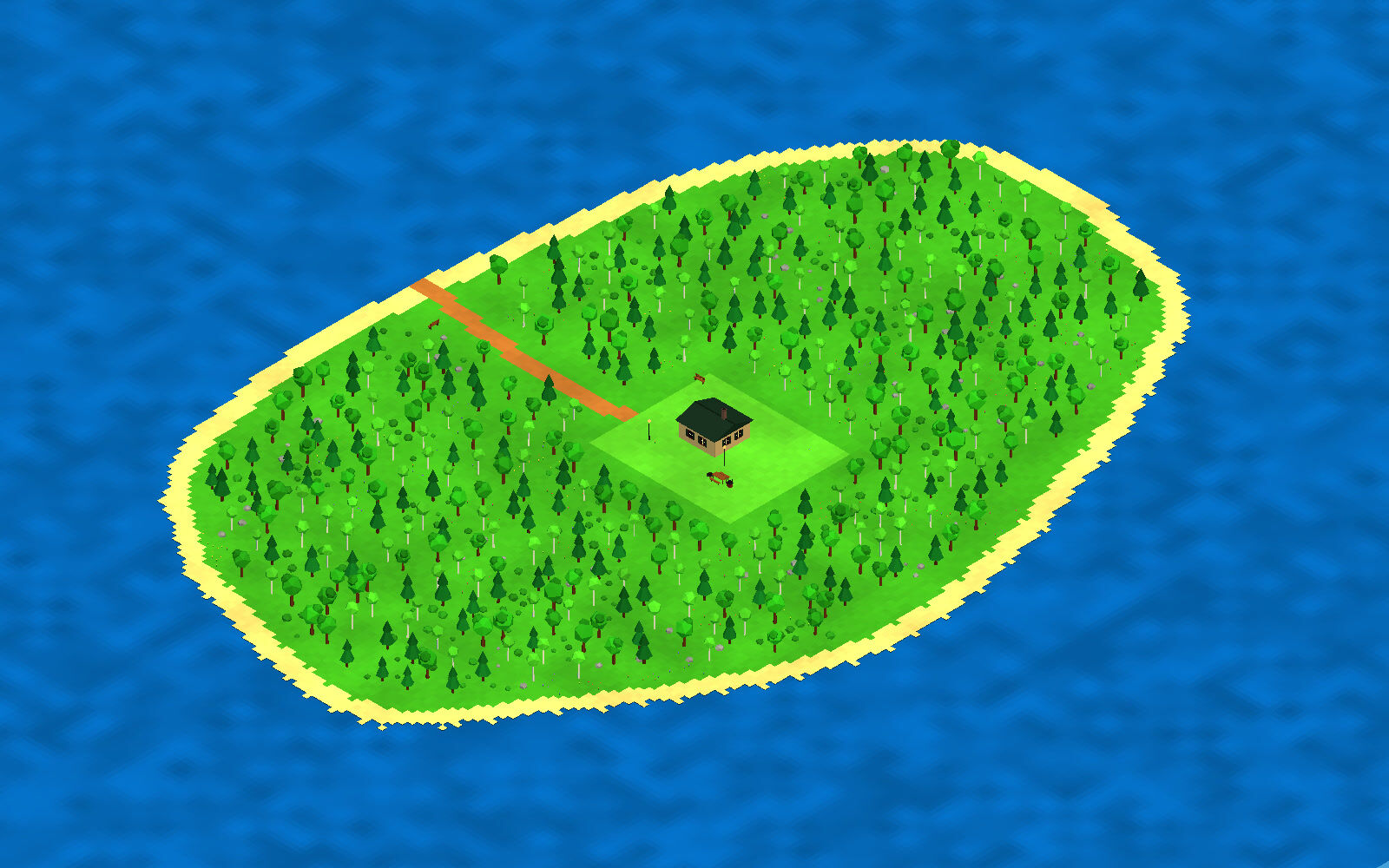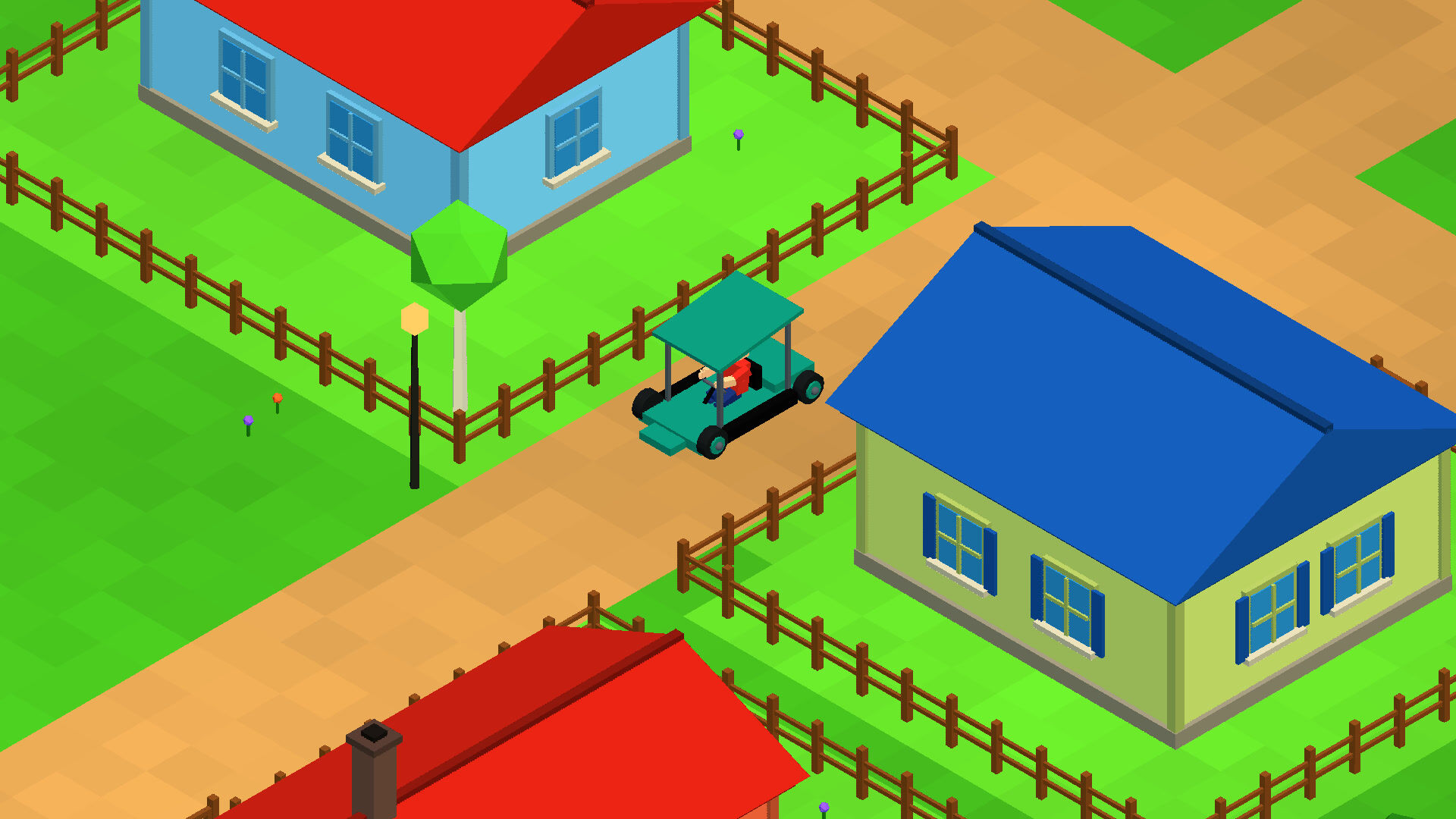


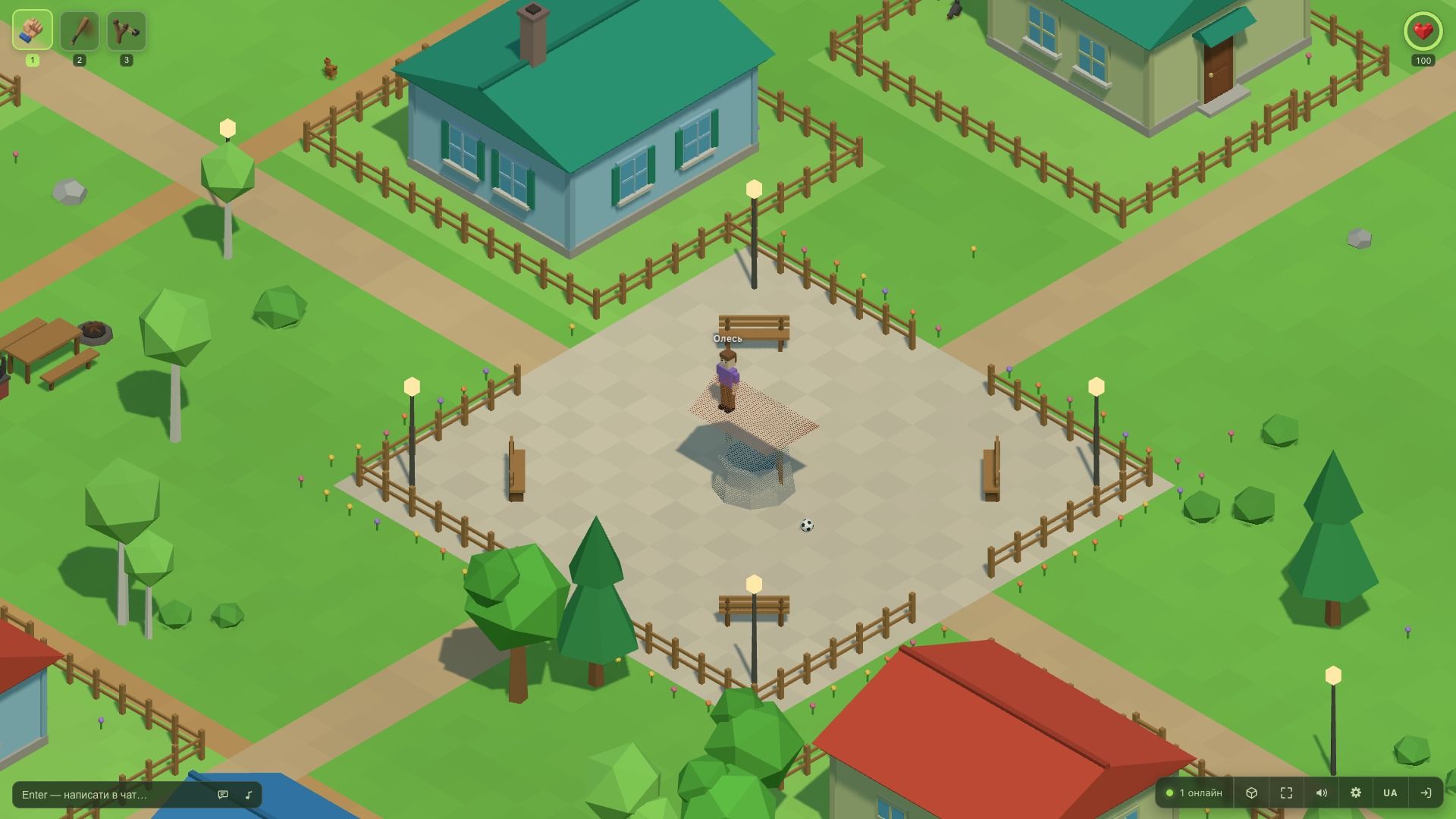
The first version of Isomania is live. It is an isometric multiplayer sandbox village that runs right in the browser: a fixed isometric camera angle, one shared world for all players at once, and a character who remembers where you were when you left the game. Nothing needs to be installed — open the page in your browser and you are already in the game.
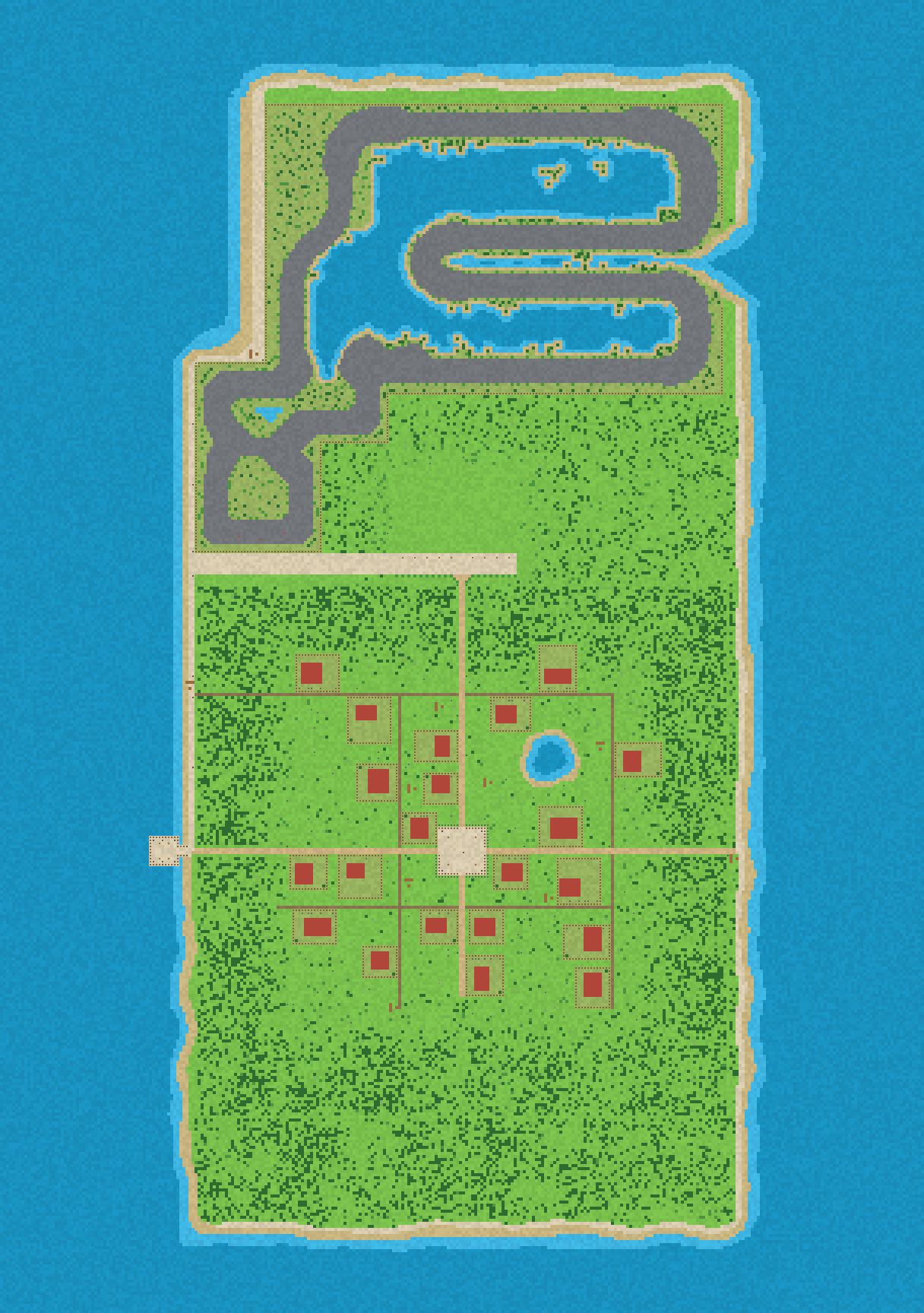
A whole village from a single map seed
The village map was not drawn by hand, it was generated from one single number — a seed that was obtained once and has been kept in the database ever since.
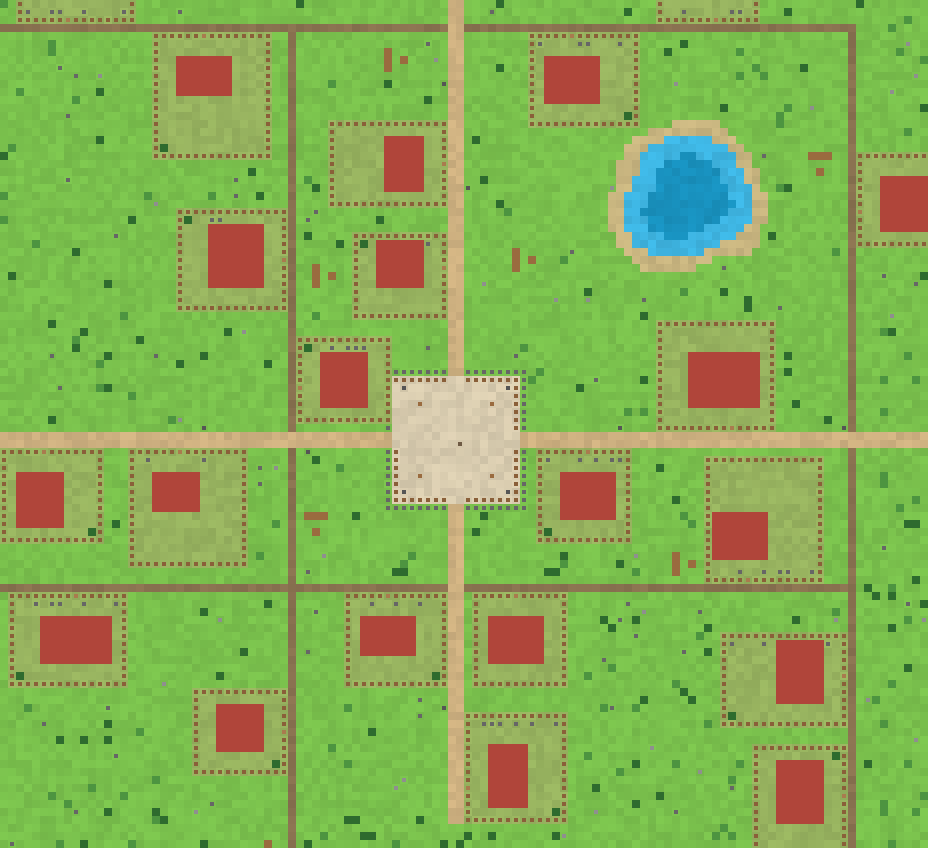
The same seed builds the world twice: separately on the server and separately in your browser. The code that does this is shared by both sides, so the collision grid on the server comes out exactly the same as the one the player walks on.
Nothing else travels over the network, neither the map itself nor a list of buildings — only that one number.
The server always has the last word
When you press a key, the browser draws the step immediately, without waiting for the server to answer. This approach is called client-side prediction, and it is what keeps the controls instant even on a poor connection.
The server, however, is what checks everything. The browser reports the position to it 15 times a second, the server clamps the speed and additionally walks the whole path segment in small steps, so that a sudden ping spike cannot carry a player through a fence.
Your character sees other players with a small delay and smoothing, because even movement reads better than real-time jitter.
The result is simple: walking through a wall is not possible, even if the code in your own browser is modified.
What can already be done in the sandbox
- Walk, run on Shift and sneak on C, as well as jump.
- Cross fences in two ways: vault one at a run, or walk right up to it and climb it with E. Only fences yield, while house walls and trees stay impassable. Every crossing is recalculated by the server itself, from the position it sees.
- Bump into people. Players do not pass through one another, but if two have already overlapped, they can always move apart.
- Chat. Messages appear as a bubble above the head and at the same time land in the side panel.
- Set up the character’s appearance on the way in, and next time it will be the same.
The sound of the street
The sound is built on Web Audio. The street ambience loops continuously with no audible seam, and footsteps are taken not from a timer but directly from the walk animation.
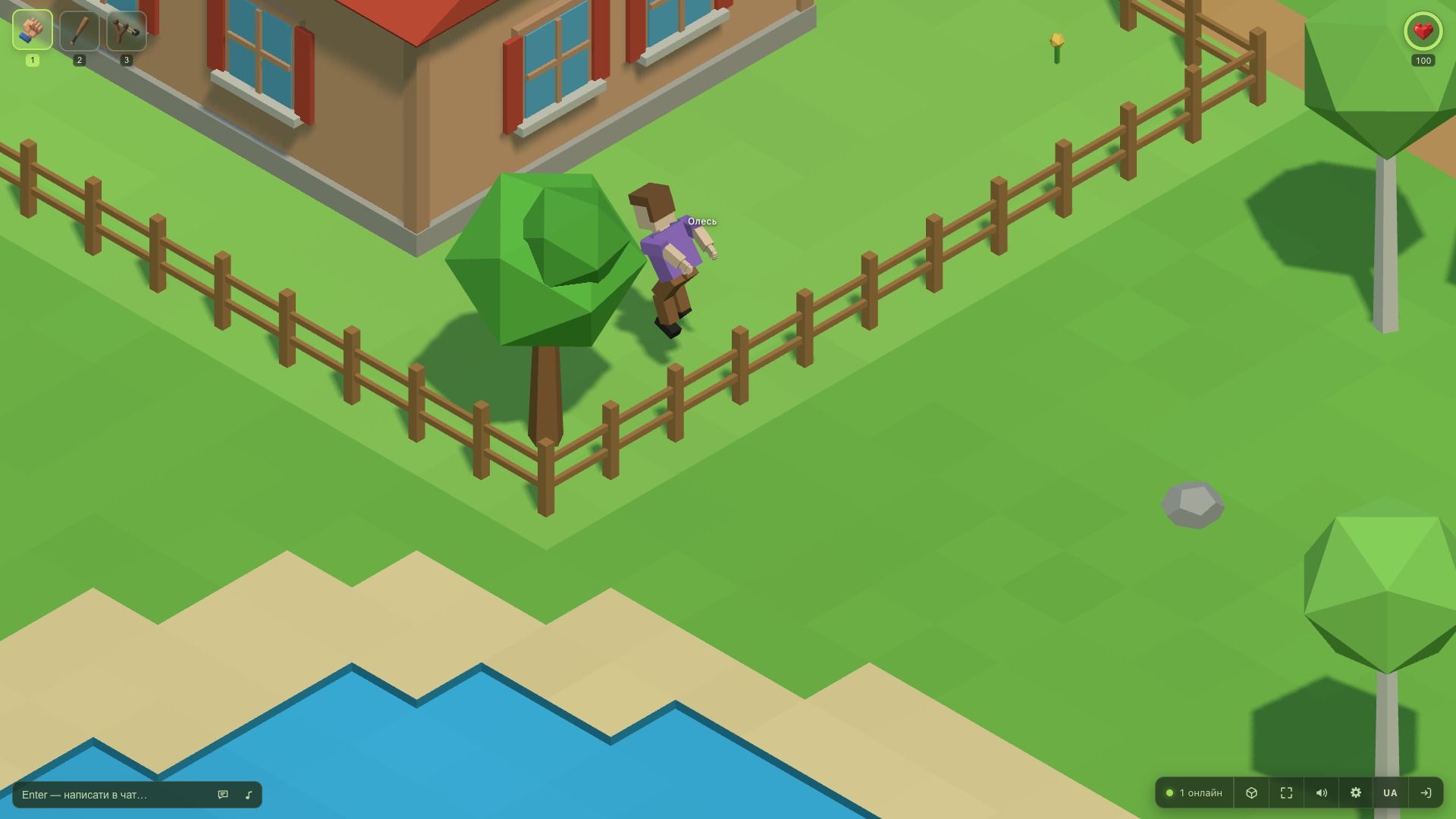
Because of this, a step sounds exactly when the foot touches the ground. The same recording never plays twice in a row, and other players’ footsteps grow quieter with distance and shift to the left or to the right depending on which side the person is walking from.
Signing in without a password
Entering the game requires only a name and an email address, passwords are not used here. The email is tied to the character, which means it is your account in the game, so next time the game recognises you again and you end up in your own place.
This is only the beginning
The game already works, but for now it is almost empty, as befits a new sandbox. The main content is still ahead.
News about every important and interesting update will appear here: what exactly was added and why, how it was done and what difficulties came up along the way.